How do you design a bathroom with natural stone throughout?
Last updated November 2026.
Quick answer
- Hardest common choice
- Granite resists scratches and stains (Fine Homebuilding)
- Acid-sensitive stones
- Marble, travertine, limestone react to acids; seal and avoid acidic cleaners
- Bathroom marble resealing
- Often every 2–3 years; water test is 15 minutes
- Stone tub weight
- About 1,100–2,500 lb empty; 500–900 lb of water when full
- Marble, onyx, granite density
- About 168 lb/ft³; travertine 156; limestone 150
Use the hardest, least porous stone where water and wear are greatest, floors and shower areas, and the softer, more beautiful stone on walls, the vanity and the tub. Keep to two stone families, honed on floors, and plan for weight and sealing before you order.
Get a quote with exact size and weight
Which stone goes where in a stone bathroom?
Honed granite, slate or a dense honed marble on wet floors; marble, travertine or onyx on walls, tub and vanity. Fine Homebuilding calls granite very hard and resistant to scratches and stains, and marble and limestone softer.
| Surface | Good choices | Why |
|---|---|---|
| Floor | Honed granite, slate, honed marble | Wear and wet use |
| Shower walls | Marble, travertine (filled) | Sealed, with a waterproof layer behind |
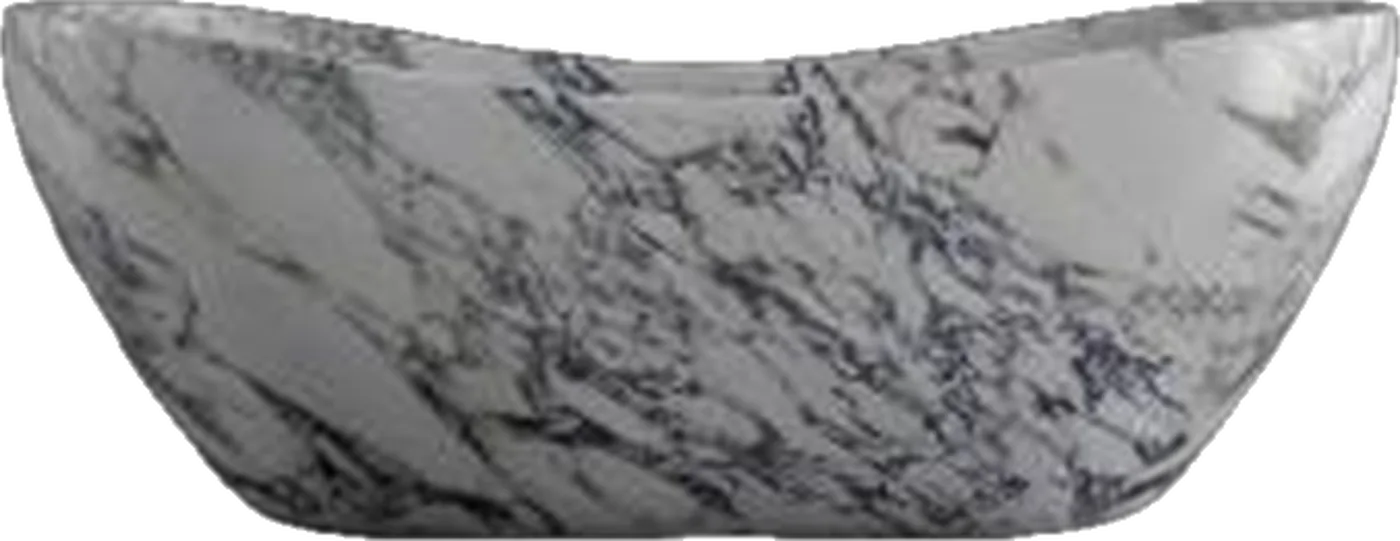
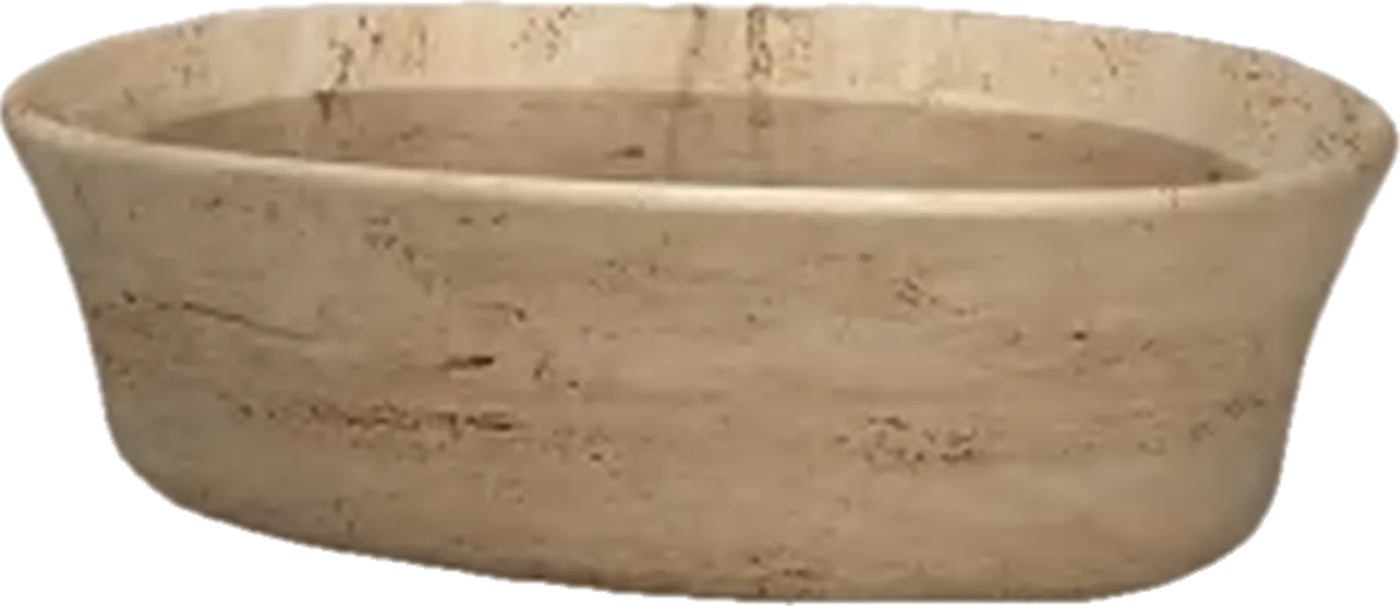
| Tub | Marble, travertine, onyx | Carved from one block; see care |
| Vanity | Marble, soapstone | Basin and top in one stone |
| Feature wall | Onyx | Translucent; keep out of foot traffic |
Source for stone behavior: Fine Homebuilding, Natural Stone. Pairings are design judgment.
Take the slab or tile out of the box and check it dry and wet before installation. Finishes change how stone looks in water: polished shows scratches and wear most, honed is matte, and tumbled is rough and pitted and hides wear but stains more easily than polished stone, per Fine Homebuilding.
Planning a stone bathtub?
Tell us about the room. We reply within one business day with options, and every quote gives the exact dimensions and weight of the piece.
Can you mix different stones in one bathroom?
Yes. Limit it to two stone families, one finish language and a shared undertone, such as warm travertine with honed white marble. Cool Carrara next to warm travertine can look accidental unless it is deliberate.
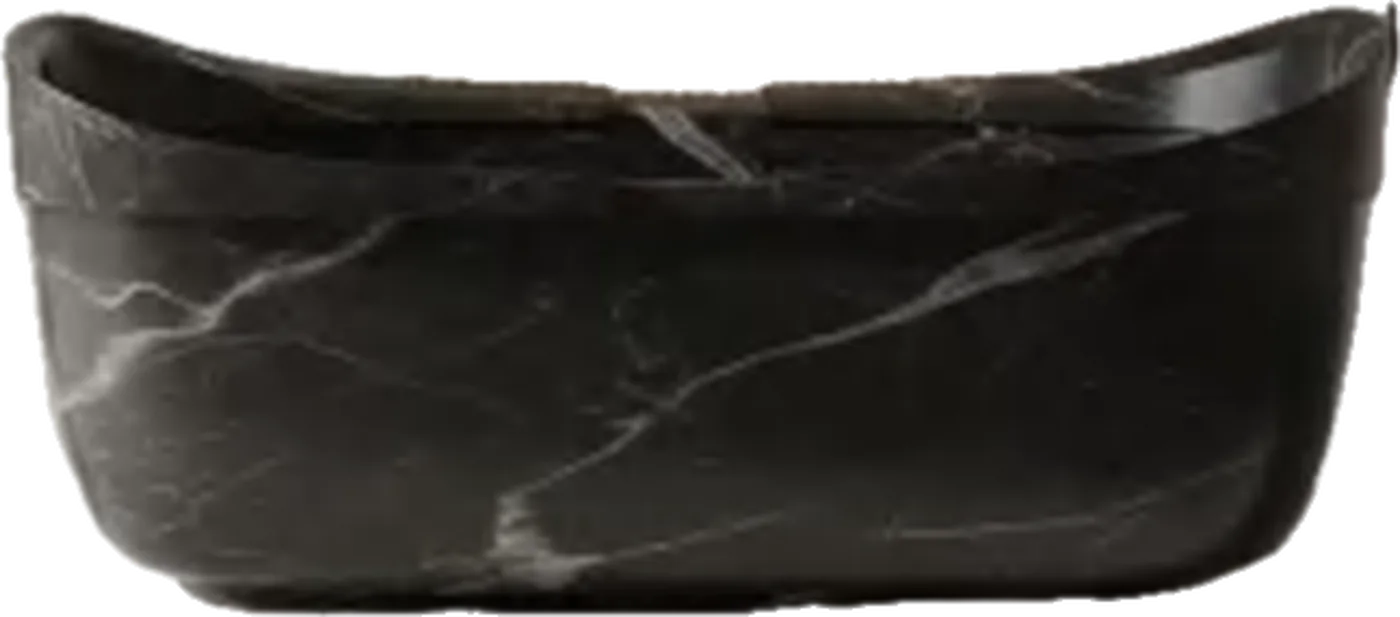
Let one stone carry the largest surface and the second carry the objects (tub, basin, niche). Compare Calacatta, Carrara and Nero Marquina in person; see our sample book.
A reliable pairing is a pale veined marble on walls and tub with a darker, honed stone on the floor, such as Nero Marquina or basalt. For a warm room, travertine with crema marfil shares an undertone.
How heavy is a stone bathroom?
Heavy in the details: a solid stone tub is about 1,100–2,500 lb empty and holds 500–900 lb of water, and our 67 × 31 × 22 in reference tub loads about 170 psf filled against 40 psf typical. Tile and a vanity top add more. Ask a structural engineer.
Densities we use: marble, onyx and granite about 168 lb/ft³, travertine about 156, limestone about 150. A stone vessel basin or vanity adds load at the wall; check blocking. See the weight guide.
How do you seal stone in a bathroom?
Seal clean, dry stone with a penetrating sealer, then test. Pour about a quarter cup of water, wait 15 minutes and reseal if the stone darkens. Bathroom marble is often resealed about every 2–3 years; honed and white Carrara marble may need it sooner. Sealing damp stone traps moisture.
Sealers reduce absorption but do not prevent etching, because acids react with calcium carbonate. Fluoropolymer penetrating sealers last about 3–5 years, siloxane types 1–3, though those lifespans come from fabricator experience. See how to seal marble.
How should a stone shower be built?
Waterproof first. Grouted stone is permeable, so a waterproof layer must sit beneath it; This Old House lists foam board, bonded sheet and liquid membranes. Slope the floor at least 1/4 in per foot to the drain.
Travertine's surface cavities can be filled with grout or epoxy for a smoother surface, per Fine Homebuilding. Trim pieces are generally unavailable, so edges come from a fabricator.
Use cement board around tub and shower tile areas per Ask the Builder, with a membrane over it, and tile the walls before the floor. Stone also dries slowly, so give it airflow.
What about lighting and ventilation?
Stone looks best under warm light from the side. Size the fan at 1 cfm per square foot of floor, add 20% for ceilings over 8 ft, choose 1 sone or less on a GFCI circuit. Steam and sealed stone dry slowly without airflow.
A wet-rated fan at 1 sone or less keeps the room quiet enough that you run it. Run it at least 20 minutes after bathing.
What mistakes ruin a stone bathroom?
- Acidic cleaners on marble, travertine or limestone.
- Polished stone floors in wet areas.
- Four stones with four undertones.
- Ordering by photo with no sample.
- Ignoring weight at the tub and vanity.
Do not seal until the stone is clean and dry, and do not use acidic cleaners. Read stone bathtub care for the cleaning routine.
Sources
Every piece is made to order. Tell us about the room and we reply within one business day.
Get a quoteOrder the sample book