What is marble, and is it good for a bathtub or sink?
Last updated November 2026.

Quick answer
- Rock type
- Metamorphic; recrystallized calcite or dolomite
- Mohs hardness
- About 3 for calcite
- ASTM C503 density
- 162 lb/ft³ minimum (calcite), 175 (dolomite)
- ASTM C503 absorption
- 0.20% by weight maximum
- Main weakness
- Etching from acids; sealer does not prevent it
Marble is a metamorphic rock made mostly of recrystallized calcite or dolomite. It is a good material for a solid tub or basin because it carves cleanly, polishes well and absorbs very little water. Its limit is chemical: acids dull the surface, and no sealer prevents that.
What is marble?
Marble is a metamorphic rock. It starts as limestone or dolomite and recrystallizes under heat and pressure into an interlocking mosaic of carbonate crystals. That structure is why it is dense, why it takes a polish, and why sculptors have worked it for centuries.
For a bathroom, the result is a material that absorbs very little water and carves into thick, smooth walls. The cost is chemistry. Calcite reacts with acid, so marble is a stone you live with rather than a surface that stays untouched. Many owners treat the soft patina as part of the appeal.
What are the properties of marble?
| Property | Marble |
|---|---|
| Rock type | Metamorphic; interlocking crystals of calcite or dolomite, usually not foliated [2] |
| Mohs hardness | Calcite, the usual main mineral, is 3 on the Mohs scale [3] |
| Density (ASTM C503 minimum) | 162 lb/ft³ for calcite marble; 175 lb/ft³ for dolomite marble [1] |
| Water absorption (ASTM C503 maximum) | 0.20% by weight [1] |
| Compressive strength (ASTM C503 minimum) | 7,500 psi [1] |
| Acid sensitivity | Calcite dissolves in dilute acid and releases carbon dioxide [3] |
| Color and veining | White from very pure limestone or dolomite; clay, sand, iron oxides or chert make the swirls and veins [2] |
| Finish and wet areas | Honed marble is very absorbent and should be sealed; polished marble shows etching as lost shine [4] |
| Translucency | Light penetrates and scatters, giving a waxy look [2] |
Numbers in brackets refer to the sources at the end of this page. Natural stone varies block to block.
Planning a piece in marble?
Tell us about the room. We reply within one business day with options, and every quote gives the exact dimensions and weight of the piece.
What is marble made of, and why does every block look different?
Pure white marble comes from very pure limestone or dolomite. Everything else comes from impurities present when the rock formed: clay, sand, iron oxides and chert produce swirls, clouds and veins in gray, gold, brown or black. Green tones often trace to serpentine in magnesium-rich source rock.
Two calcium-based families matter to buyers. The standard for marble dimension stone, ASTM C503, splits the material into calcite marble and dolomite marble, with a higher minimum density for dolomite.
| Property | Calcite marble | Dolomite marble |
|---|---|---|
| Minimum density | 162 lb/ft³ | 175 lb/ft³ |
| Maximum absorption | 0.20% by weight | 0.20% by weight |
| Minimum compressive strength | 7,500 psi | 7,500 psi |
Source: ASTM C503 (08a edition). Later editions may differ, so confirm against the current standard.
Individual blocks differ in pattern, shade and soundness. The standard sorts marble into soundness groups A to D, based on how many natural voids and flaws need waxing, filling or reinforcement. Marble is classified by its producer, so the group is a question to ask about any block.
How does marble behave around water, soap and acids?
Water is the easy part. With a maximum of 0.20% absorption by weight in the ASTM table, a sound block barely takes on moisture, and a bath full of hot water does not harm it. Soap film is the nuisance, and a quick wipe or squeegee after use keeps it from building up.
Acids are the real hazard. Calcite fizzes in dilute acid, and on a polished surface the loss shows as a dull patch where the shine was removed. Lemon juice, wine, vinegar and many bathroom cleaners are enough. The damage is to the finish and top layer, so it can usually be refinished.
A Mohs hardness of about 3 means a steel blade or gritty cleaner can scratch it, though a fingernail generally cannot.
Does sealing stop marble from etching?
No. Sealing and etching are separate problems. A penetrating sealer fills pore space so oil and dyes soak in slowly, which helps against stains. It does not coat the crystals, so acid still reaches the calcite.
Honed marble is more absorbent than polished and benefits most from sealing; polished marble shows etching more clearly because it loses shine. Re-seal when water stops beading on the surface. Use a sealer made for natural stone and follow its label.
Which marble pieces suit a bathroom, and where are the limits?
- Freestanding tub: thick walls and a honed or lightly textured interior floor give grip. Weight is the planning issue; a filled tub can reach about 170 psf on its footprint against 40 psf typical floor live load.
- Vessel sink: low water volume and short contact with soap make this the gentlest use. Keep toothpaste, hair products and cleaners off the rim.
- Pedestal basin: a single carved piece that carries its own weight, but it still needs a rated floor and a plumber who has handled stone.
- Vanity top and basin: toiletries sit on the surface, so expect etch rings from products with acid or fragrance oils.
Limits: outdoor use in freezing climates, bathrooms where no one will wipe up spills, and any project that needs a surface to look identical in ten years. For structural loads and drains, check with a structural engineer and a licensed plumber, and follow local code.
How do you care for a marble tub or basin?
- Rinse and wipe after each use so soap scum does not dry on the surface.
- Clean with a pH-neutral stone cleaner or mild soap and water. Avoid vinegar, lemon, bleach blends and abrasive powders.
- Blot spills of perfume, toothpaste or hair dye right away.
- Re-seal on the schedule the sealer maker gives, or when water stops beading.
- Call a stone restoration professional for etch marks or deep stains.
The full routine is in the stone bathtub care guide.
How does marble compare with travertine and onyx?
Travertine is a freshwater limestone with natural pores, filled or open, and a warmer, banded look; the travertine vs marble comparison covers it in detail. ASTM C1527 allows travertine up to 2.5% absorption, against 0.20% for marble.
Onyx marble is banded calcite that is softer and translucent, and it is handled more gently; see onyx. Named white marbles such as Carrara and Calacatta are looks within this same family.
What does Pietra Fonte make in marble?
Pietra Fonte carves marble to order: marble bathtubs, marble basins and vanities. Each piece is cut from a single block, specified with the buyer or designer, and inspected with photos or video before it ships. Every quote gives exact dimensions and weight.
Marble names such as Carrara or Calacatta describe a look, not a promise about where a block was cut. Use the sample book to see options, or bespoke for custom work.
Pieces we make in marble
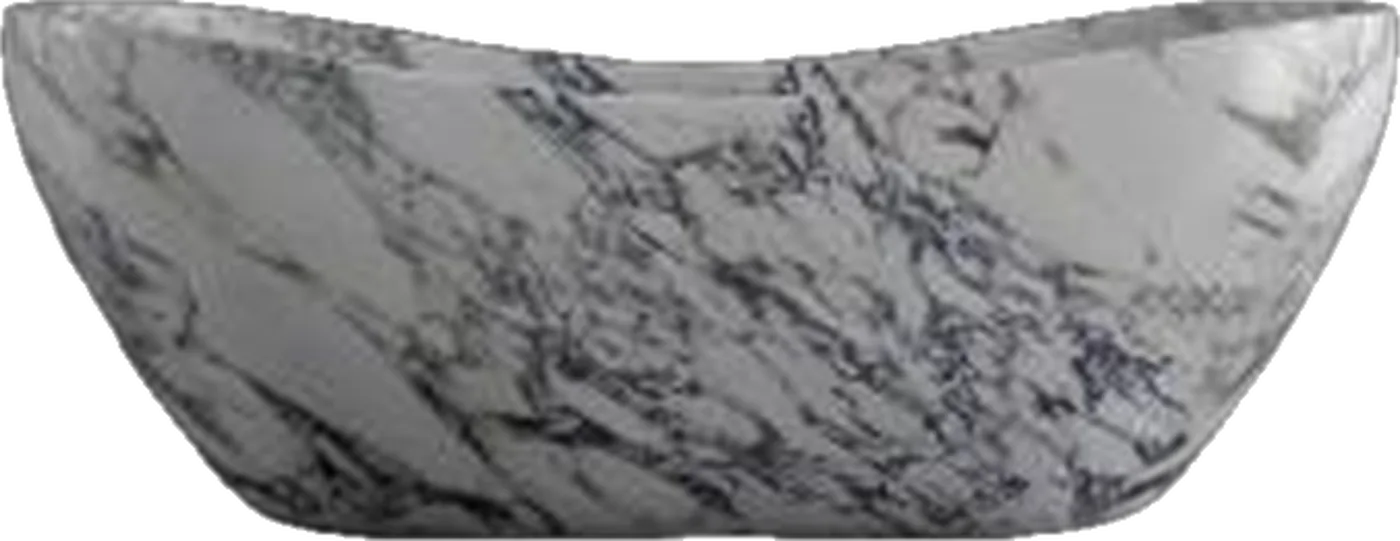
Freestanding bathtub
Onda Freestanding Tub
Marble · Travertine
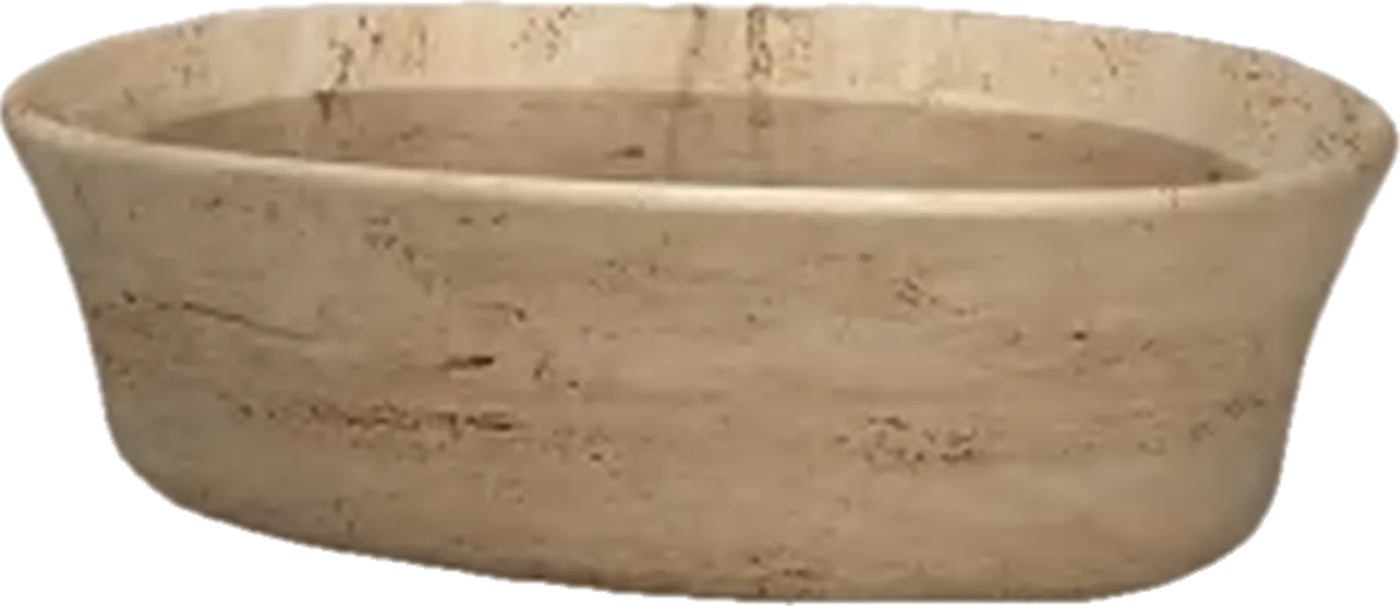
Freestanding bathtub
Terra Freestanding Tub
Travertine · Marble
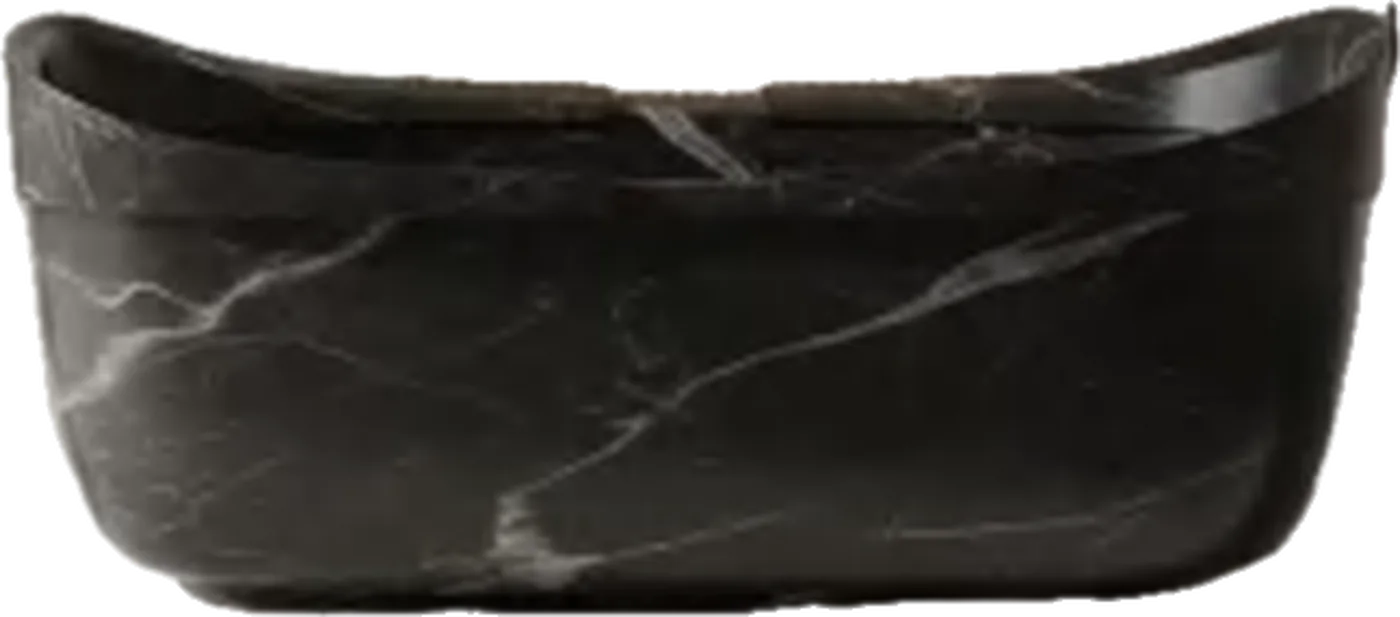
Freestanding bathtub
Notte Freestanding Tub
Nero Marquina · Black Marble
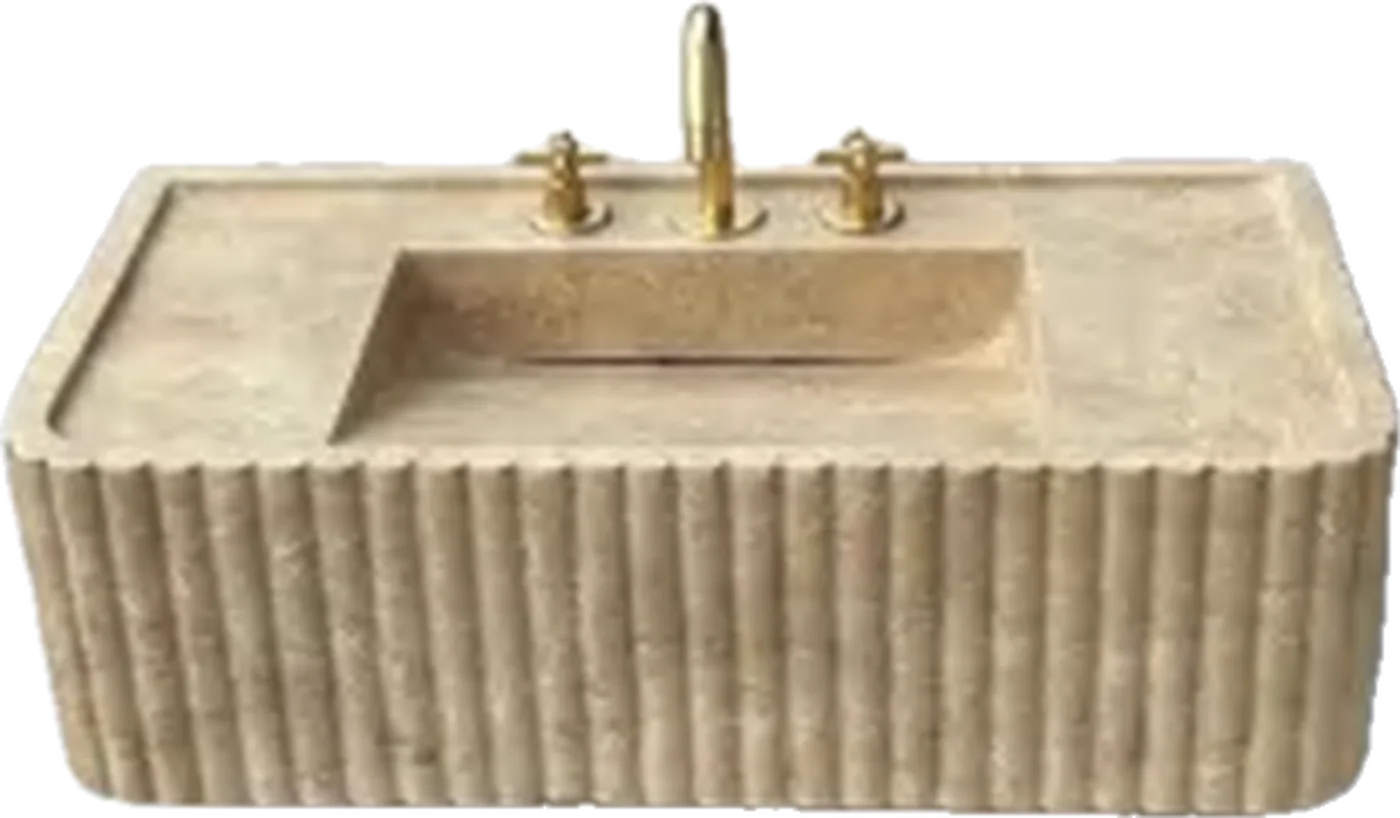
Vessel basin
Scanalata Wall Basin
Travertine · Beige Marble
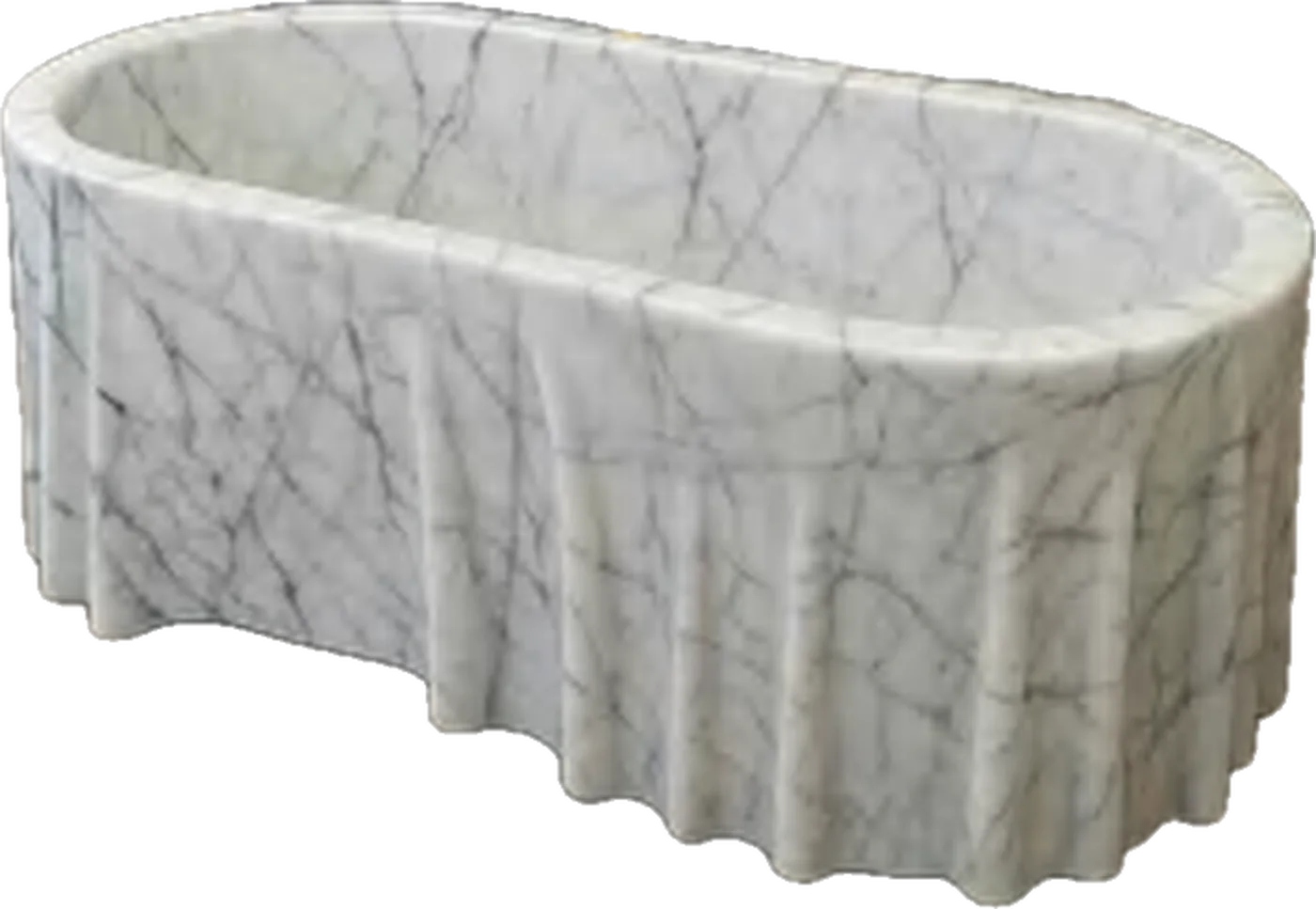
Freestanding bathtub
Drappo Freestanding Tub
Calacatta · Carrara
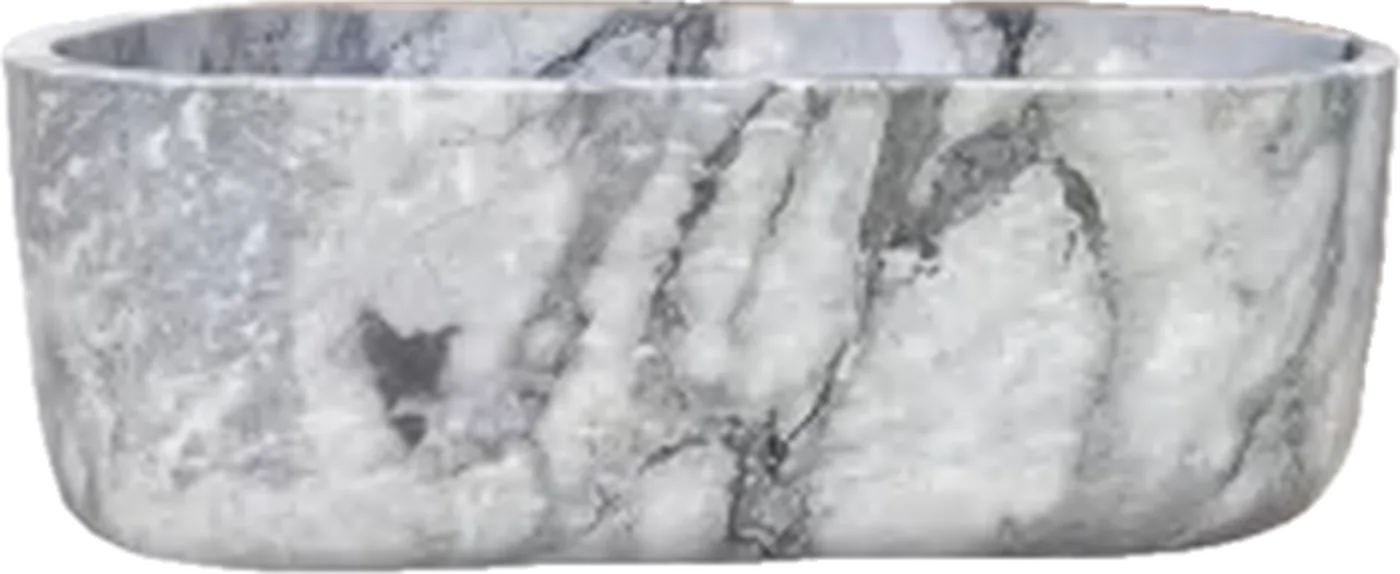
Freestanding bathtub
Nembo Freestanding Tub
Grigio Marble

Vanity
Viola Single Vanity
Calacatta Viola

Vanity
Arabescato Floating Vanity
Arabescato

Vanity
Ovale Vanity
Beige Marble
Vessel basin
Nuvola Wall Basin
Arabescato

Pedestal basin
Notte Pedestal Basin
Black Marquina

Pedestal basin
Scultura Pedestal Basin
Gray Marble
Vessel basin
Sassolino Vessel Basin
Travertine · Marble
Sources
Every piece is made to order. Tell us about the room and we reply within one business day.
Get a quoteOrder the sample book