What are the best travertine bathroom ideas?
Last updated November 2026.
Quick answer
- Color range
- White, cream, tan, rusty brown; also gray (silver)
- Fresh porosity
- About 10–70%; ancient travertine can drop to about 2%
- Density used for weight
- About 156 lb/ft³ (marble about 168)
- Sealing
- Penetrating sealer about once a year in daily-use baths
- Space in front of tub
- 30 in recommended (NKBA), 21 in code minimum
The best travertine bathroom ideas use honed or brushed travertine in a few large surfaces: a soaking tub, a continuous floor, a vessel basin on a wood top, or a feature wall. Travertine suits bathrooms that want warmth and texture, but it is porous, so seal it and avoid acidic cleaners.
Get a quote with exact size and weight
Is travertine a good choice for a bathroom?
Yes, with care. Travertine is a warm, texture-rich stone that has been a building material since Roman times, but it is porous and calcium-based, so it needs sealing and neutral cleaners.
Travertine is freshwater limestone that forms when calcium carbonate precipitates from water, mostly around hot springs, as dissolved carbon dioxide escapes. Pure, fine travertine is white; impurities turn it brown or yellow, and iron can add a red tint. It is sold in shades from gray to coral-red.
Fresh travertine is about 10–70% porous, and its surface often shows pitted holes and troughs. That porosity gives its texture and also its main weakness. See the travertine stone page.
Planning a stone bathtub?
Tell us about the room. We reply within one business day with options, and every quote gives the exact dimensions and weight of the piece.
Which finish works best for a travertine bathroom?
Honed or brushed finishes keep the natural texture and reduce glare. Dense varieties can be polished for decorative use, but a polished surface shows etching and water marks faster. Silver travertine offers a cooler gray version of the same character.
| Finish | Look | Best use |
|---|---|---|
| Honed | Soft matte, pits visible | Tub, floor, walls |
| Brushed | Textured, slightly worn | Floors, feature walls |
| Polished | Glossy, mirror-like on dense stone | Vanity tops, if you accept etching |
Travertine formation and use: Wikipedia, Travertine.
Where should you use travertine in a bathroom?
Five uses work well, and you rarely need all of them.
- Tub: a rounded or oval travertine tub as the room's anchor.
- Floor: large-format honed tile or slab with few joints.
- Wall: one feature wall behind the tub or vanity.
- Basin: a travertine vessel basin on a wood or plaster top.
- Vanity: a stone-top vanity in a plain base.
Travertine has been used in floors, facades, cladding and spa walls, and its porosity gives good thermal and acoustic insulation.
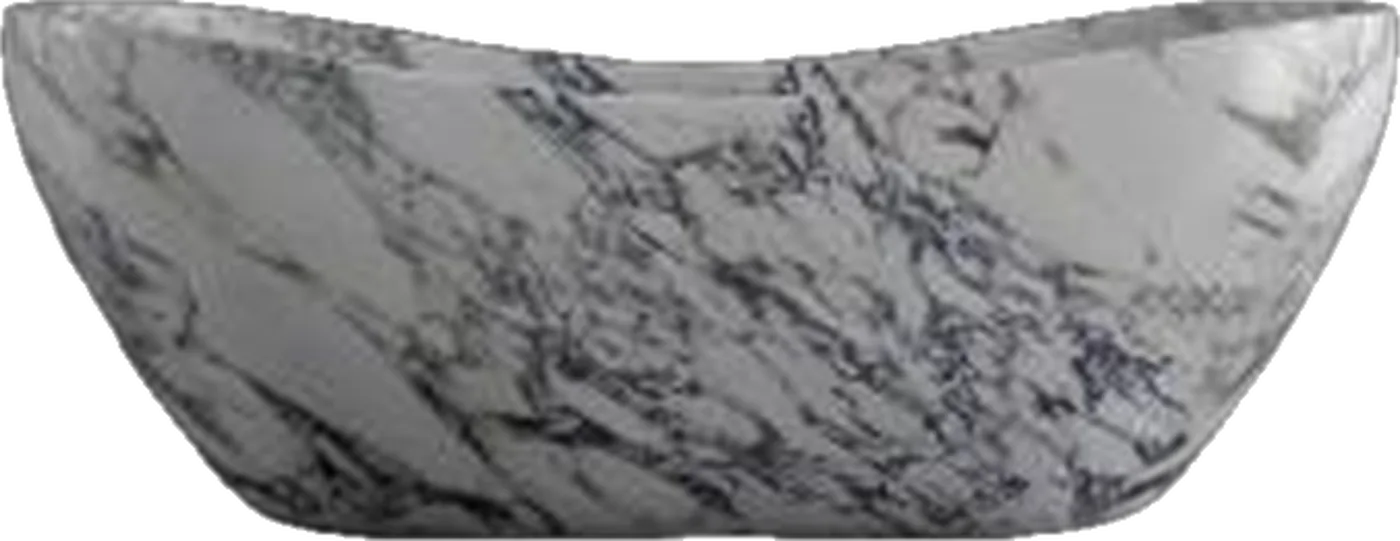
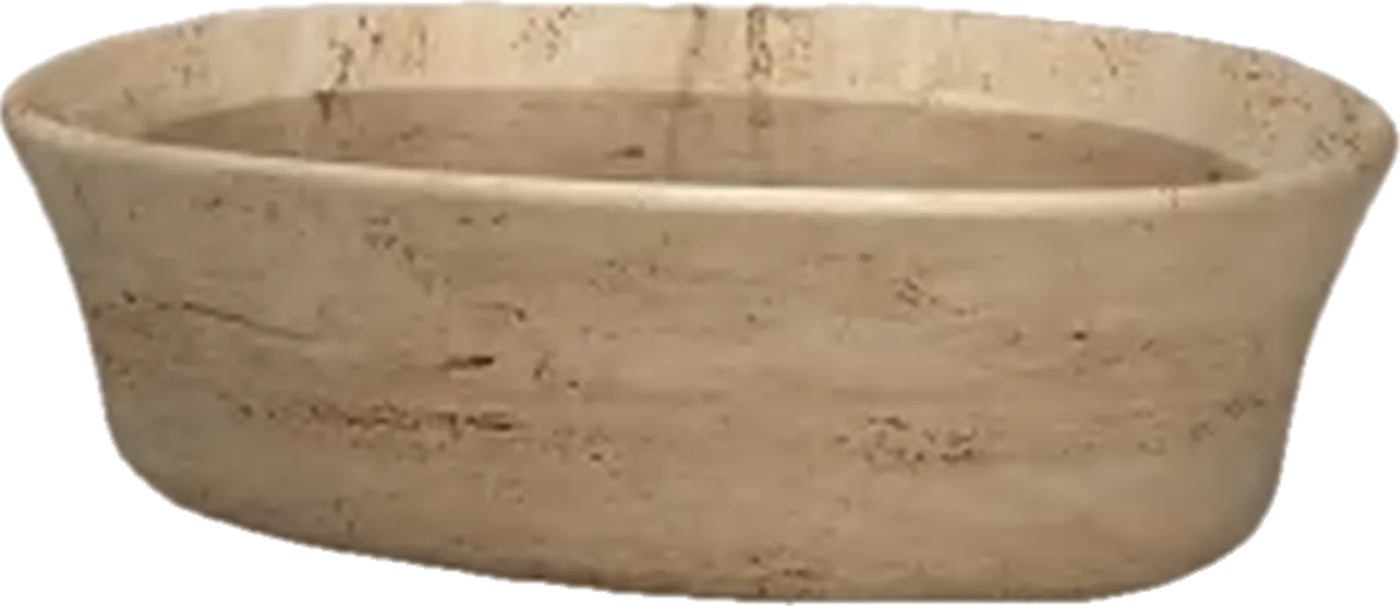
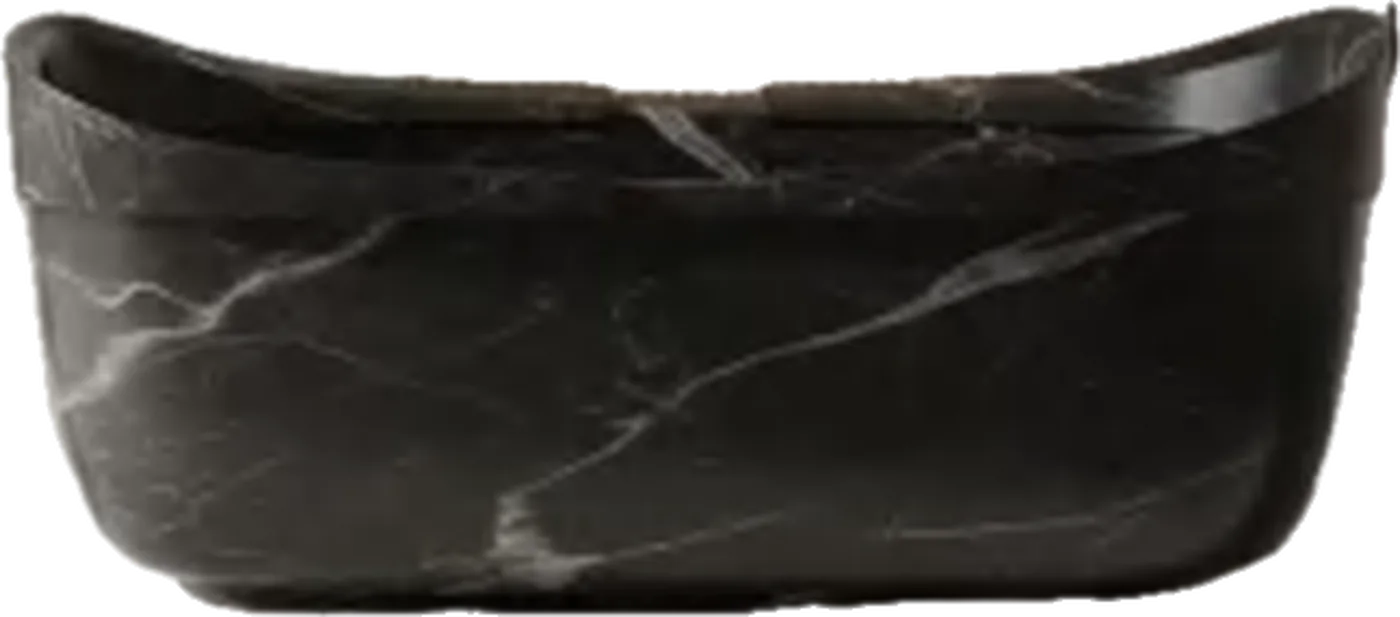
How does travertine compare with marble for a tub?
Travertine is lighter in tone, more textured and about 156 lb/ft³ in our weight model, against marble at about 168. Marble is smoother and takes a higher polish. Both are calcium carbonate stones that etch in acid. The travertine vs marble guide compares them in detail.
Choose travertine for warmth and texture, marble for smoothness and veining. See also marble.
How much space does the layout need?
Provide 30 in clear in front of the tub (NKBA; code minimum 21 in). For the toilet, NKBA recommends 18 in from the centerline to the nearest obstruction (code typically 15 in) and 30 in clear in front. A 48 in walkway gives 18 in for the person at a fixture and 30 in to pass.
A solid stone tub weighs about 1,100–2,500 lb empty, with 500–900 lb of water. Read the weight guide, confirm clearances with local code and ask a structural engineer to check the floor.
How do you seal and care for travertine?
Seal daily-use bathroom stone with a penetrating sealer about once a year, and use a neutral pH cleaner. Acidic substances etch travertine and remove the finish. Squeegee walls after showering, leave the door open so moisture escapes, and expect professional honing or repolishing every two to five years.
See the stone care guide for more.
How should light and ventilation work?
Warm, grazing light shows travertine's texture; flat white light hides it. Use cross lighting at the mirror and a recessed waterproof light over the tub or shower. Duct the exhaust fan outdoors, sized to local code.
What drives the budget?
Published US prices for solid-stone tubs run about $7,930–$37,000 (Oct 2026), stone vessel basins $435–$5,950 (most $600–$1,700) and stone vanities $1,267–$14,999. Size and stone grade drive most of the difference. See the marble tub cost guide for the range logic.
Block selection affects the result as much as size: travertine varies in color banding and pitting from block to block. Ask for photos and video of the finished piece before shipping, and compare the quote's dimensions and weight against your floor plan.
What mistakes weaken a travertine bathroom?
- Skipping sealer.
- Acid-based cleaners.
- Gloss polish on a porous stone.
- Pairing with cool white tile; keep to warm neutrals.
- Ordering without seeing slabs, since color and pitting vary.
Before you order, plan where water sits. Travertine around a tub deck or vanity gets the most splashing, so seal those areas first and wipe standing water. In a shower, hold the sealer schedule strictly, since moisture needs a path out and porous stone takes the path of least resistance.
Sources
Every piece is made to order. Tell us about the room and we reply within one business day.
Get a quoteOrder the sample book