What makes an organic modern bathroom, and which stone suits it?
Last updated November 2026.
Quick answer
- Core idea
- Modern clean lines softened by natural textures and curved forms
- Palette
- Warm neutrals: cream, oat, clay, stone gray, muted green
- Best-fit stone
- Honed travertine, silver travertine or soapstone
- Travertine porosity
- 10–70% when fresh; seal it
- Space in front of tub
- 30 in recommended (NKBA), 21 in code minimum
An organic modern bathroom softens clean modern lines with natural texture: curved forms, plaster or lime-like walls, wood and honed stone in warm neutrals. Honed travertine fits best, because its pitted, earthy surface and cream-to-tan range supply the texture, while rounded tubs and basins supply the curves.
Get a quote with exact size and weight
What makes a bathroom organic modern?
Organic modern is a design-trade term rather than a formal movement, so its definition comes from practice, not a standards body. In bathrooms it means a modern plan with clean lines, softened by natural materials, curved shapes and warm neutrals.
Three traits recur: rounded forms (oval tubs, arched mirrors, pebble-like basins), tactile surfaces (plaster, travertine, wood) and a muted earthy palette. It borrows the restraint of minimalism without the austerity.
Planning a stone bathtub?
Tell us about the room. We reply within one business day with options, and every quote gives the exact dimensions and weight of the piece.
Which palette and materials does it use?
Build from cream, oat and clay, add stone gray and a muted green, and avoid pure white and black.
- Walls: plaster-effect paint or plaster in a single warm tone.
- Wood: oak or ash with a matte oil finish.
- Metal: matte black, bronze or aged brass in one finish.
- Textiles and glass: linen, woven baskets, fluted or ribbed glass.
Which stone suits an organic modern bathroom best?
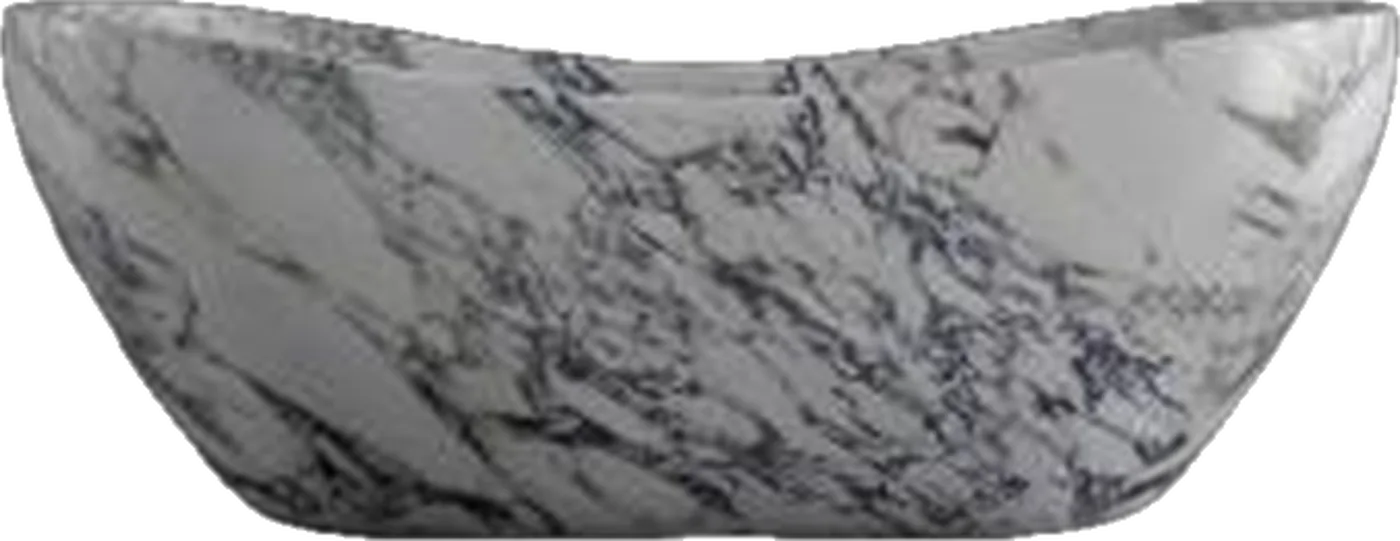
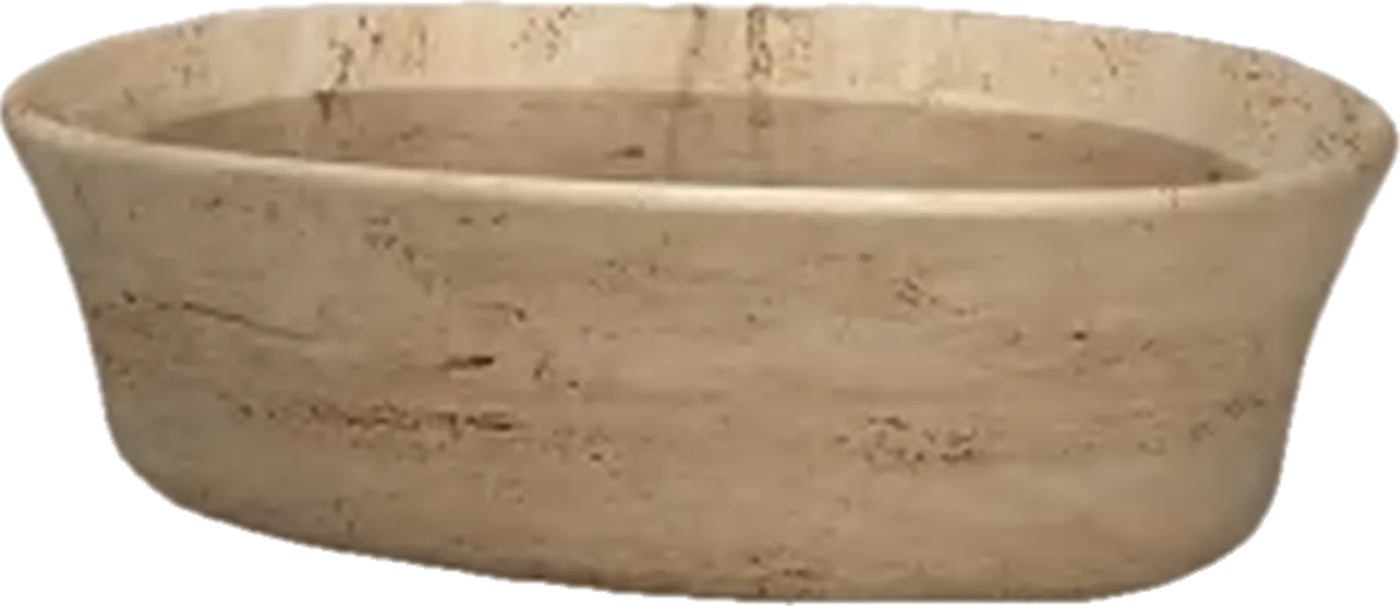
Travertine is the strongest match. It forms from calcium carbonate deposited by spring water; pure material is white and impurities make it cream, tan or brown. Its pitted, uneven texture reads as natural, and honing keeps it soft to the eye. Silver travertine gives a cooler gray.
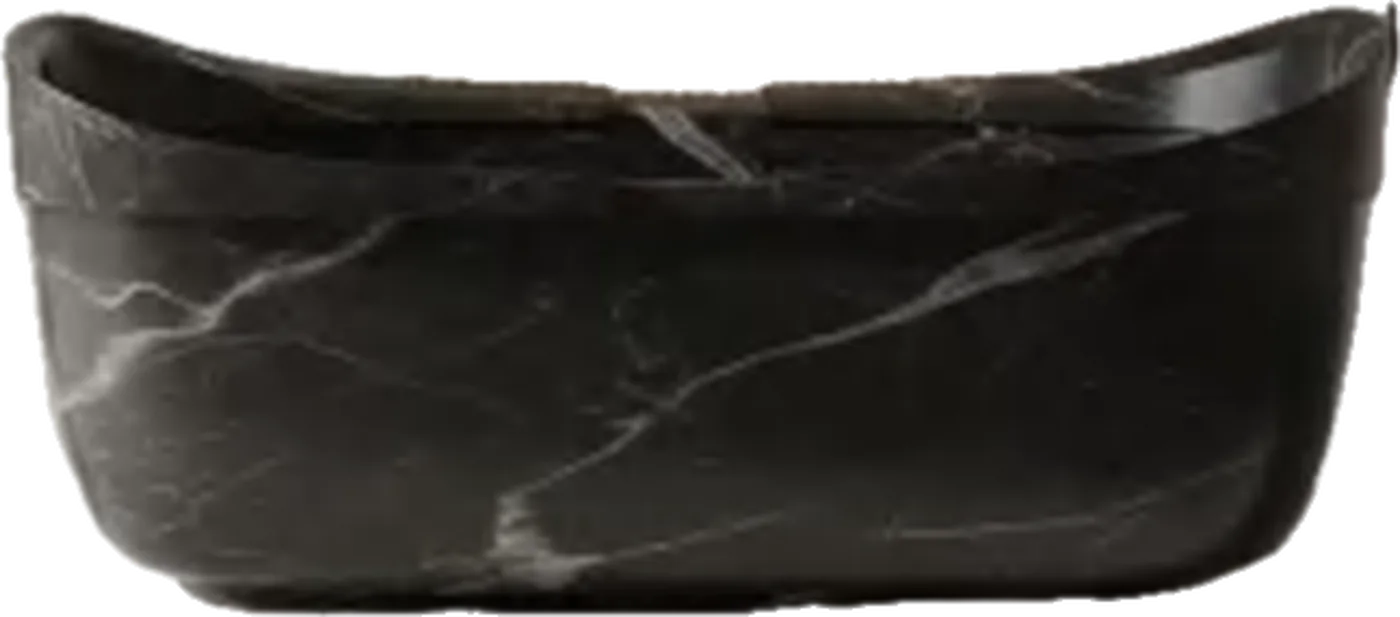
Soapstone offers a dark, matte contrast, and Crema Marfil a smoother cream. Compare options in the travertine vs marble guide.
| Element | Choice | Why |
|---|---|---|
| Tub | Honed travertine, soft oval | Curve plus earthy texture |
| Floor | Honed travertine, large format | Warm and non-glossy |
| Basin | Rounded stone vessel on oak | Mixed materials, one sculptural form |
| Walls | Plaster-effect paint | Soft, matte backdrop |
| Accent | Soapstone or dark wood | Depth against pale stone |
Travertine facts: Wikipedia, Travertine.
What is a wabi sabi bathroom?
Wabi-sabi is a Japanese aesthetic that appreciates what is imperfect, impermanent and incomplete. Its traits include asymmetry, roughness and visible wear, simplicity, modesty and respect for natural materials.
In a bathroom, that means unpolished stone, hand-finished surfaces, an off-center arrangement and objects that age. Travertine suits it because its surface is naturally uneven. Wabi-sabi sits closer to Japandi; see the Japandi guide for the calmer version.
How much space does the layout need?
Allow 30 in clear in front of the tub (NKBA; code minimum 21 in) and 30 in beside it. For the toilet, NKBA recommends 18 in from centerline to the nearest obstruction (code typically 15 in) and 30 in clear in front. A 48 in walkway lets one person use a fixture while another passes.
Curved tubs and basins use floor differently from rectangular ones, so draw them at full size. Confirm with local code and a licensed plumber.
Which tub, basin and vanity fit?
Look at travertine tubs, all bathtubs, travertine basins and vanities. A rounded vessel basin on a wood top delivers the mixed-material look in one move.
Travertine is about 156 lb/ft³ versus 168 for marble in our weight model, but solid tubs still weigh about 1,100–2,500 lb empty. Read the weight guide and have a structural engineer check the floor.
How should light and ventilation work?
Warm light brings out texture. Use cross lighting at the mirror and a recessed waterproof light over the tub or shower. Add a sconce or a low, diffuse source to rake light across plaster.
Natural stone and plaster need dry air. Duct the exhaust fan outdoors, sized to local code, squeegee wet walls and leave the door open afterward.
What drives the budget?
Published US prices for solid-stone tubs run about $7,930–$37,000 (Oct 2026), stone vessel basins $435–$5,950 and stone vanities $1,267–$14,999. Size, stone and curve complexity drive the spread. See the marble tub cost guide.
Curved forms cost more to carve than straight ones, and larger tubs need more stone. Plaster and wood are inexpensive next to stone, so spend on the tub and floor and keep accessories simple.
What mistakes weaken the look?
- Too many textures at once; limit to three.
- High-gloss polish on travertine.
- Acidic cleaners, which etch travertine and marble.
- Skipping sealer; seal about once a year in daily-use bathrooms.
- Matching every wood and metal tone exactly; the style wants variation inside one warm family.
The common thread is restraint: choose a few tactile materials and let one stone lead. If a room starts to feel busy, remove a texture rather than adding a color. Ask for a physical sample of each stone and view it in the room's own light, because travertine in particular varies in color, pitting and vein direction from block to block.
Sources
Every piece is made to order. Tell us about the room and we reply within one business day.
Get a quoteOrder the sample book