What makes a Japandi bathroom, and which stone suits it?
Last updated November 2026.
Quick answer
- Style origin
- Japanese minimalism plus Scandinavian simplicity; the term appeared around 2016
- Palette
- Off-white, beige and soft gray, with natural-finish wood
- Best-fit stone
- Honed travertine or softly veined honed marble
- Space in front of tub
- 30 in recommended (NKBA), 21 in code minimum
- Solid stone tub weight
- About 1,100–2,500 lb empty
A Japandi bathroom pairs Japanese restraint with Scandinavian warmth: pale walls, natural wood, a low-contrast stone palette and very few objects. Honed travertine or a softly veined honed marble expresses it best, because a matte, slightly irregular surface carries the wabi-sabi side of the style without shine.
Get a quote with exact size and weight
What defines a Japandi bathroom?
Japandi combines Japanese aesthetics with Scandinavian design. The name blends Japan and Scandi and came into use around 2016. In a bathroom it comes down to three decisions: natural materials, a restrained palette, and uncluttered surfaces lit by warm, indirect light.
The Japanese side contributes wabi-sabi, a taste for imperfect, aging, natural things. The Scandinavian side contributes comfort and a bright, soft room. The result should feel calm and visually light, not staged.
Planning a stone bathtub?
Tell us about the room. We reply within one business day with options, and every quote gives the exact dimensions and weight of the piece.
Which palette and materials does Japandi use?
Walls are usually off-white, beige or soft gray, which also helps natural light travel through the room. Natural materials do the rest: stone, bamboo, paper and wood with a natural finish.
- Keep to three or four tones and repeat them: one wood, one stone, one wall color.
- Choose wood with visible grain and an oil or matte finish rather than lacquer.
- Use metal sparingly and in a single finish.
- Leave shelves partly empty; the open space is part of the design.
Which stone best expresses a Japandi bathroom?
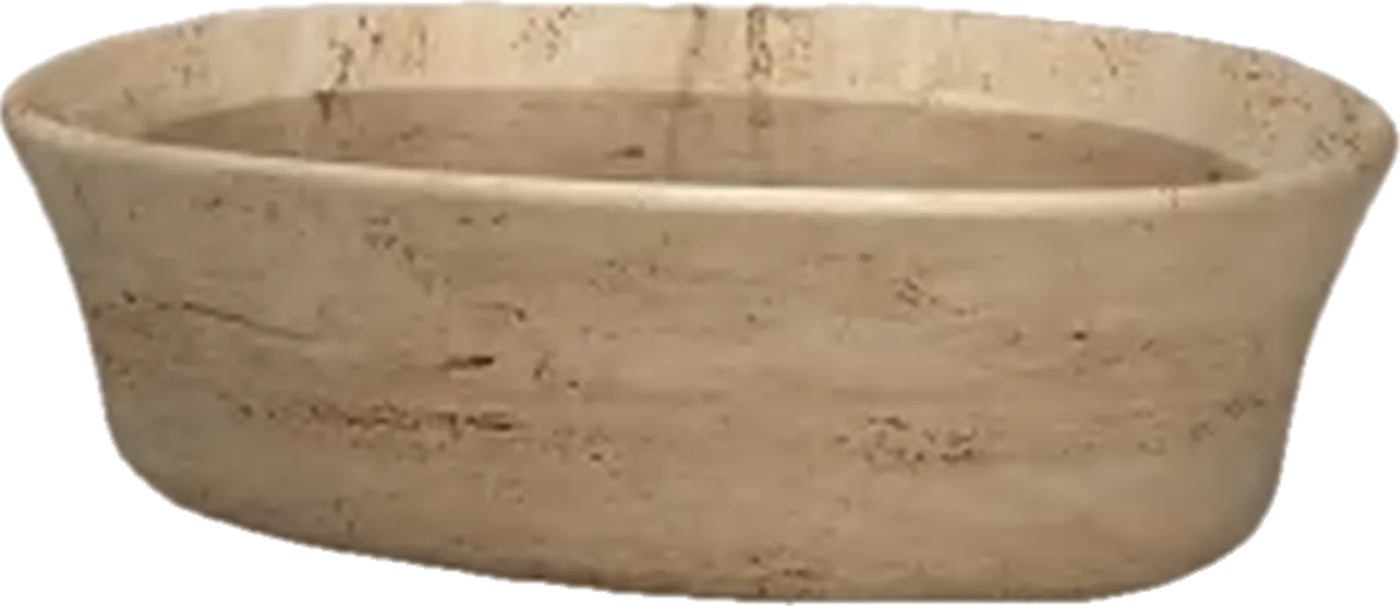
Honed travertine is the strongest match. It forms when calcium carbonate precipitates from spring water, pure material is white, and impurities turn it cream, tan or brown. Fresh travertine can be 10–70% porous, which is why its surface shows pits and troughs. That uneven, tactile quality is what wabi-sabi values.
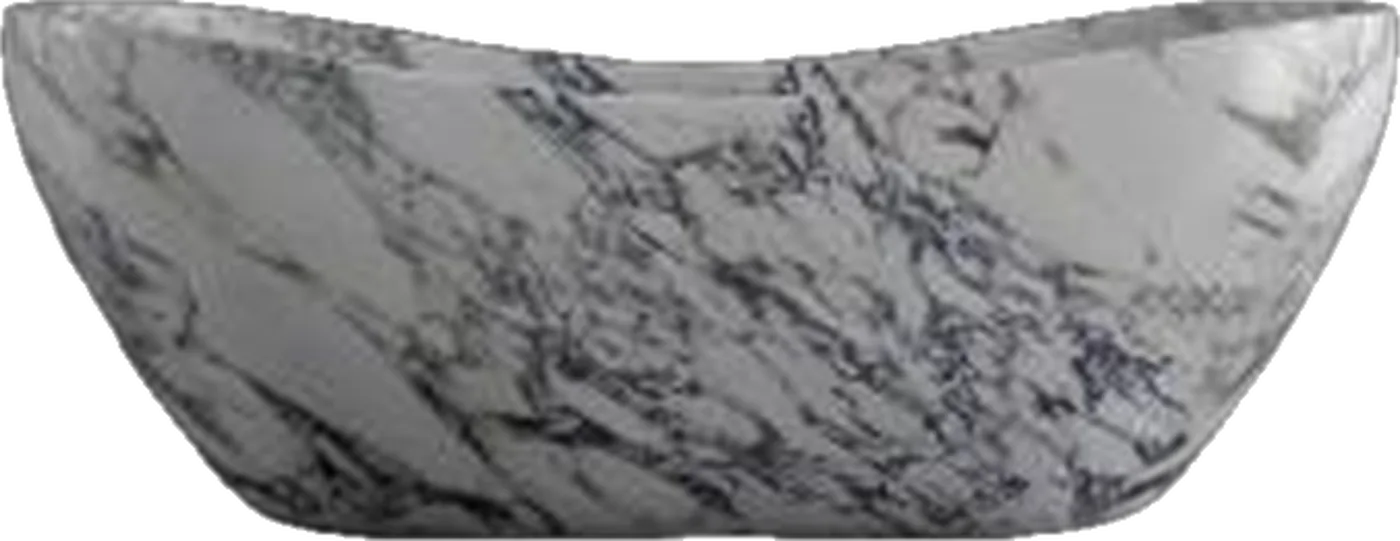
Silver travertine suits cooler, grayer rooms. For a smoother plane, choose Carrara, which is white or blue-gray, in a honed finish; the honed vs polished guide explains the trade-off.
| Element | Choice | Why |
|---|---|---|
| Tub | Honed travertine or Carrara, rounded oval | Soft form, matte surface, no ornament |
| Floor | Honed stone, large format | Few joints keep the plane calm |
| Basin | Low stone vessel | A single sculptural object on a wood top |
| Wood | Natural-finish ash or oak | Warmth against cool stone |
| Light | Warm, indirect | Soft shadows on textured stone |
Travertine facts: Wikipedia, Travertine. Style traits: Wikipedia, Japandi.
How much space does a Japandi layout need?
Plan 30 in of clear floor in front of the tub. NKBA recommends 30 in; building code allows a minimum of 21 in, which many users find tight. Along the side of a tub, 30 in of clear space is also recommended, and a 48 in walkway lets one person use a fixture while another walks behind.
For the toilet, NKBA recommends 18 in from centerline to the nearest wall or obstacle (code typically allows 15 in) and 30 in clear in front (code 21 in). Japanese design treats empty space as an element in itself, so give the tub room before adding furniture. Confirm figures with your local code and a licensed plumber.
Which tub, basin and vanity fit a Japandi room?
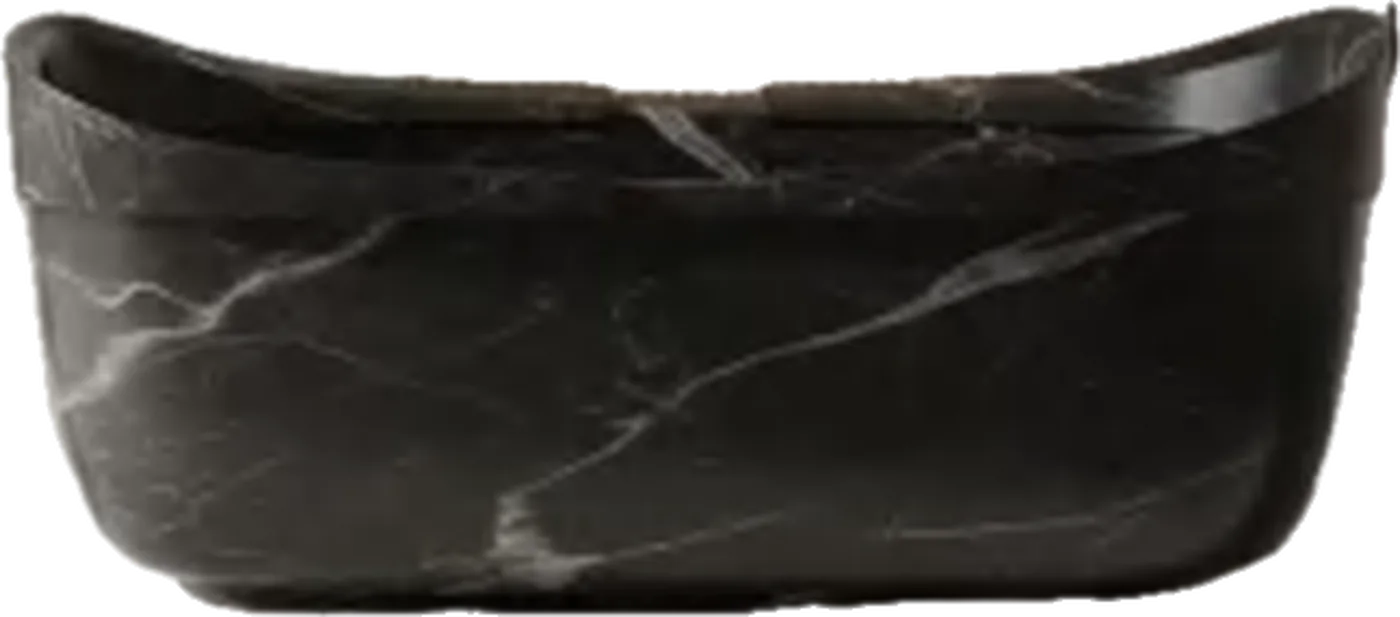
A deep, rounded soaking tub is the natural anchor. Browse travertine tubs and marble tubs, or see all bathtubs. A single vessel basin on a plain wood top matches the one-object-per-surface rule, and a low stone vanity works if you need storage.
A solid stone tub weighs about 1,100–2,500 lb empty, and a typical 67 in marble oval adds roughly 610 lb of water when 70% full. Read the weight guide and have a structural engineer check the floor. Every quote gives exact dimensions and weight.
How should light and ventilation work in this style?
Use warm, indirect light as the base layer. At the vanity, light the face from both sides of the mirror instead of one fixture overhead, and put a recessed waterproof light over the tub or shower. Daylight should be diffused, not blocked.
Moisture matters more with natural materials. Duct the exhaust fan outdoors and size it to local code. Squeegee wet walls and leave shower doors open so moisture can leave, as the Natural Stone Institute advises for stone showers.
How is Japandi different from plain minimalism?
Minimalism reduces a room to its necessary elements, with open space, neutral colors and little decoration. It spread through London and New York boutiques in the late 1980s, often with white surfaces and cool lighting. Japanese ideas such as ma (empty space) and wabi-sabi shaped it.
Japandi keeps that discipline and adds wood, warmth and visible imperfection. See the minimalist bathroom guide if you want the stricter, single-material version.
What drives the budget?
Published US prices for solid-stone tubs run about $7,930–$37,000 (Oct 2026), stone vessel basins $435–$5,950 (most $600–$1,700) and stone vanities $1,267–$14,999. Stone type, size and wall thickness set most of the spread. The marble tub cost guide breaks it down.
A Japandi room spends on a few large pieces and saves on accessories, which suits solid stone.
What mistakes break the Japandi look?
- High-gloss polish on every surface.
- Cold white light that flattens texture.
- More than four tones or three materials.
- Acidic cleaners: acid etches travertine and marble and removes the finish.
- Skipping sealer; daily-use bathroom stone should be sealed, with a penetrating sealer about once a year.
Sources
Every piece is made to order. Tell us about the room and we reply within one business day.
Get a quoteOrder the sample book