What makes a minimalist bathroom, and which stone suits it?
Last updated November 2026.
Quick answer
- Core idea
- Reduce the room to its necessary elements; "less is more" (Mies van der Rohe)
- Palette
- Neutral, one dominant tone plus one accent at most
- Best-fit stone
- One honed marble with quiet veining, used throughout
- Space in front of tub
- 30 in recommended (NKBA), 21 in code minimum
- Marble hardness
- Mohs 3 (calcite); a steel knife at 4–4.5 can scratch it
A minimalist bathroom reduces the room to its necessary elements: open space, neutral color, little decoration and hidden detail. One honed marble with quiet veining, used for tub, floor and wall, expresses it best, because the style emphasizes the texture, weight and density of a single material.
Get a quote with exact size and weight
What makes a bathroom minimalist?
Minimalism reduces a design to its necessary elements. It favors open space, neutral colors and little or no decoration, and it emphasizes the texture, weight and density of materials. Mies van der Rohe's motto was "less is more", and he made each element do several jobs.
Japanese ideas shaped the style, including ma (empty space) and wabi-sabi. Architects such as John Pawson and Tadao Ando work with natural materials and light to produce austere, calm rooms.
Planning a stone bathtub?
Tell us about the room. We reply within one business day with options, and every quote gives the exact dimensions and weight of the piece.
Which palette and materials does a minimalist bathroom use?
Choose a single dominant tone and one material for most surfaces. White, pale gray and soft beige are common; a dark monolithic room works as well if the stone is consistent.
- Materials: one stone, plain plaster or paint, clear glass, one metal finish.
- Joints: large-format slabs with tight, matching joints.
- Hardware: concealed or wall-mounted fillers, flush drains.
- Storage: recessed niches and a wall cabinet behind a mirror.
Texture does the work that color and ornament do in other styles. Honed stone, matte plaster and clear glass give three quiet textures with no visual noise, which is why minimalist architects favor natural materials and light over decoration.
Which stone suits a minimalist bathroom best?
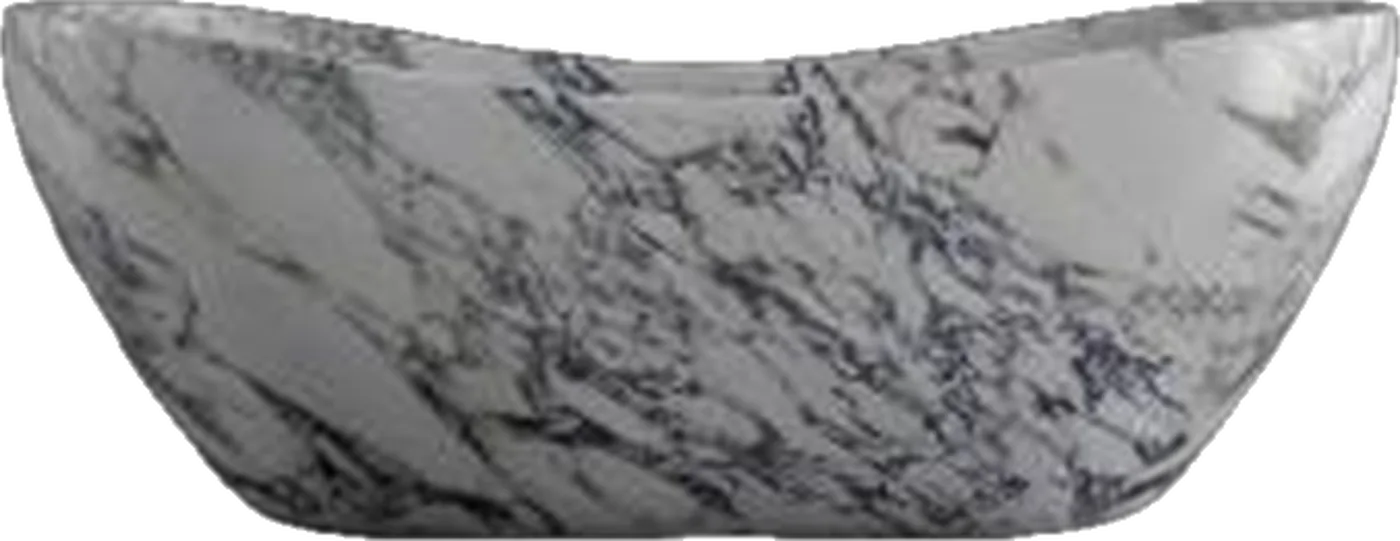
Pick one stone and use it on the floor, wall and tub so the room reads as a single block. Carrara, white or blue-gray with fine streaks, is the best low-contrast option; see marble for the wider family. A honed finish keeps reflections down, and the honed vs polished guide covers the trade-off.
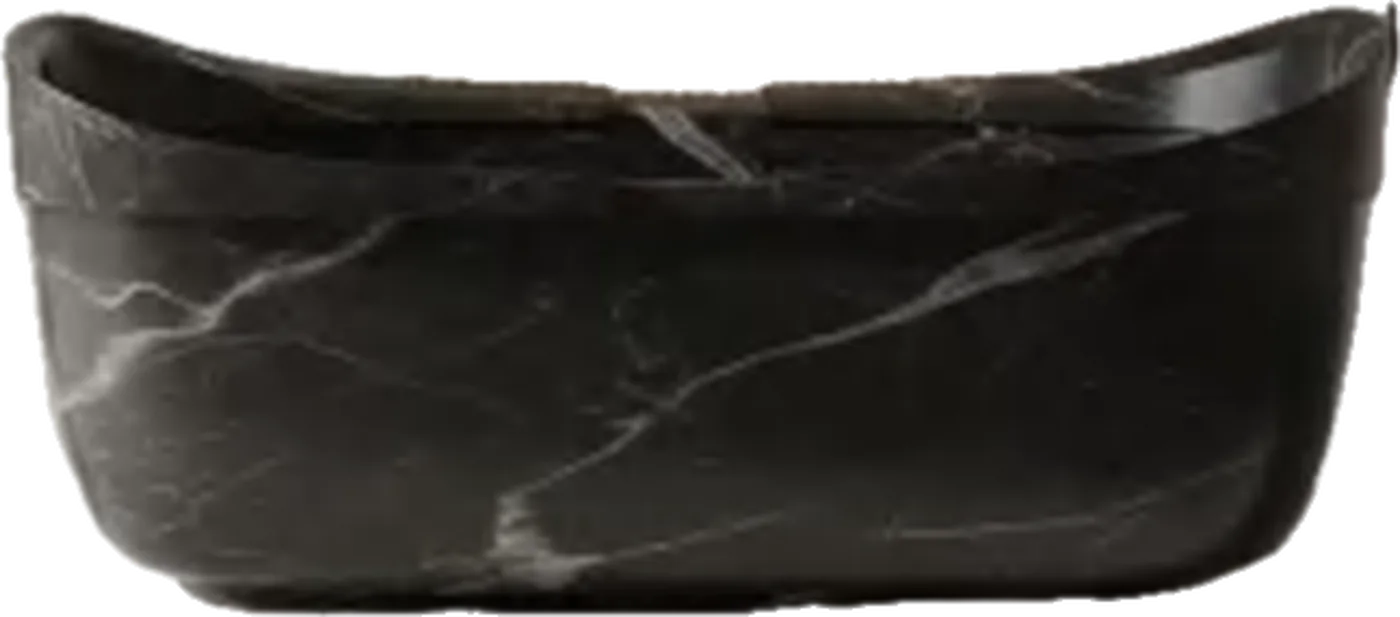
For a dark room, consider basalt or slate. Avoid heavily veined stone such as Calacatta; it adds a second idea.
| Element | Choice | Why |
|---|---|---|
| Tub | Plain oval or rectangle in the room's stone | One material, one form |
| Floor and wall | Same stone, large format | Few joints, continuous plane |
| Basin | Wall-hung or integrated stone basin | Clear floor, nothing to dust |
| Fixtures | Wall-mounted, one finish | Removes visual clutter |
| Storage | Recessed niches | Keeps surfaces empty |
Principles: Wikipedia, Minimalism. Hardness: Wikipedia, Mohs scale.
How do you plan a minimalist layout?
Fix fixture positions first. NKBA recommends 30 in clear in front of the tub and toilet (code minimum 21 in) and 18 in from the toilet centerline to the nearest wall (code typically 15 in). A 48 in walkway lets one person use a fixture while another passes.
Because a minimalist room has no decorative cover, every misaligned joint shows. Set out slab layouts and drain locations on a drawing before ordering, and confirm clearances with local code and a licensed plumber.
Which tub, basin and vanity fit?
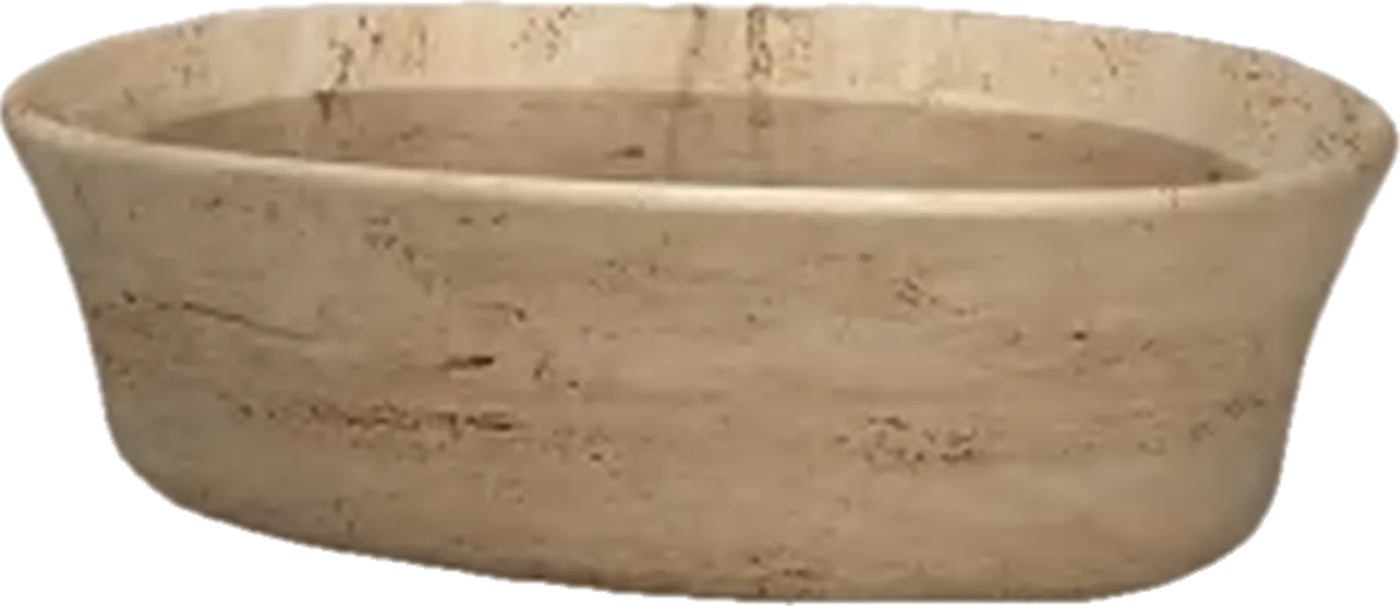
A plain oval or rectangular marble tub is the anchor; see all bathtubs. For basins, a simple marble basin or a low vessel basin works, and a floating stone vanity keeps the floor clear.
A solid stone tub weighs about 1,100–2,500 lb empty, plus 500–900 lb of water when filled. Read the weight guide and ask a structural engineer to check the floor. A made-to-order quote lists exact dimensions and weight.
How should light and ventilation work?
Minimalist interiors were often shown with white surfaces and cool lighting. In a bathroom, a neutral to warm color temperature is kinder to skin and stone. Hide fixtures in coves, recessed trims or the mirror frame.
Add cross lighting at the mirror and a recessed waterproof light over the tub or shower. Duct the exhaust fan outdoors, sized to local code, and use a flush grille.
What is the difference between minimalist and Japandi?
Minimalism is stricter. It uses few materials, little color and no ornament, and its rooms can feel austere. Japandi adds natural-finish wood, soft light and visible imperfection.
Choose minimalism if you want the room to disappear around a single stone object. Read the Japandi bathroom guide for the warmer route.
What drives the budget?
Published US prices for solid-stone tubs run about $7,930–$37,000 (Oct 2026), stone vessel basins $435–$5,950 and stone vanities $1,267–$14,999. Minimalist rooms spend on precision: slab matching, tight joints and concealed plumbing. See the marble tub cost guide.
What mistakes weaken a minimalist bathroom?
- Using three stones instead of one.
- Visible grout lines of different widths.
- Open shelves holding bottles.
- Cleaning with acids, which etch marble.
- Skipping sealer; seal daily-use stone about once a year.
Minimalism punishes imprecision. Ask for exact dimensions and drain positions from the quote, and check them against the plumbing rough-in before the stone arrives. A tub that sits 1 in off its drain will be visible in a room with nothing else to look at.
Sources
Every piece is made to order. Tell us about the room and we reply within one business day.
Get a quoteOrder the sample book