What makes an Italian-style bathroom, and which stone suits it?
Last updated November 2026.
Quick answer
- Style cues
- Bold veined marble, terrazzo, rationalist clean forms, refined detail
- Palette
- Warm white, charcoal, deep green or blush against strong veining
- Best-fit stone
- Calacatta or Arabescato marble, plus terrazzo
- Terrazzo roots
- 18th-century Venetian pavement of marble chips set in mortar
- Walkway
- 48 in where one person uses a fixture and another passes
An Italian-style bathroom treats stone as the main event: large slabs of boldly veined marble, terrazzo, simple rationalist forms and refined detail. Calacatta or Arabescato marble expresses it best because dramatic veining is the style's signature. Italian here names a look, not where any piece is made.
Get a quote with exact size and weight
What makes a bathroom Italian in style?
Italy is a global design leader, and its twentieth-century tradition runs from Rationalism, with plain, simple forms from 1926, to the postwar avant-garde in interiors and the refined work of Gio Ponti, who brought Italian Art Deco to its height. In a bathroom that tradition becomes confident geometry, high-quality surfaces and a few perfectly resolved objects.
Italian here names a look, not where a piece is made.
Planning a stone bathtub?
Tell us about the room. We reply within one business day with options, and every quote gives the exact dimensions and weight of the piece.
Which palette and details define the style?
Italian-style rooms rely on contrast: strong stone against a calm background. A warm white room with a dark or green accent works, as does a monochrome room where veining supplies the interest.
- One hero surface: a slab wall, a tub or a vanity top.
- Clean rectangular or softly rounded forms; no ornament.
- Matching stone on floor and walls, book-matched where veins run.
- Slim metal in brushed or satin finish.
- Frameless glass and recessed niches.
Which stone best expresses an Italian-style bathroom?
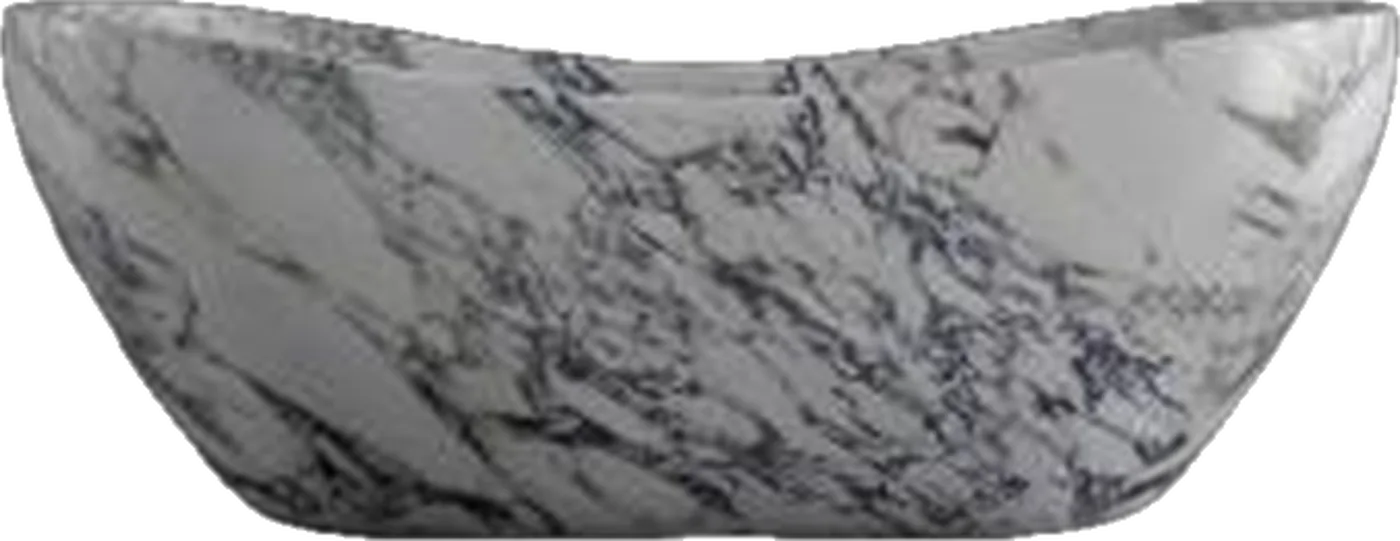
Calacatta and Calacatta Gold show thick, dramatic veining on a white ground. Arabescato has a looping, branching pattern that suits large wall slabs. Carrara, white or blue-gray with finer streaks, is the quieter option.
Veining comes from impurities such as clay, iron oxides or chert in the original limestone, redistributed during metamorphism. That is why no two slabs match, and why you should view slabs before commissioning. See the marble page for care rules shared by all of them.
| Element | Choice | Why |
|---|---|---|
| Tub | Calacatta or Arabescato, plain oval or rounded rectangle | Veining is the decoration |
| Floor | Terrazzo or honed marble | Color and pattern without ornament |
| Walls | Book-matched slabs | One continuous pattern |
| Vanity | Marble top on a plain base | Calm structure for strong stone |
| Metal | Brushed nickel or satin brass | Quiet against veining |
Terrazzo: Wikipedia, Terrazzo. Veining: Wikipedia, Marble. Design history: Wikipedia, Italian design.
What is terrazzo and why does it suit this style?
Terrazzo is a composite of marble, quartz, granite or glass chips in a cement or polymer binder, ground and polished smooth, often with metal divider strips. Its direct predecessors are 18th-century Italian: the Venetian pavement of marble fragments in mortar and the cheaper seminato method.
Epoxy-based terrazzo is impermeable and stronger but suited to interiors only. Acids and alkalis can damage it, and a worn surface can be re-polished. It is a good floor beneath a veined marble tub. See the terrazzo page.
How much clear space does the layout need?
Provide 30 in clear in front of the tub (NKBA; code minimum 21 in) and 30 in along its side. For the toilet, NKBA recommends 18 in from centerline to the nearest obstruction (code typically 15 in) and 30 in clear in front. A 48 in walkway leaves 18 in for the person at a fixture and 30 in to pass behind.
Confirm with local code and a licensed plumber, and measure from finished stone surfaces.
Which tub, basin and vanity fit?
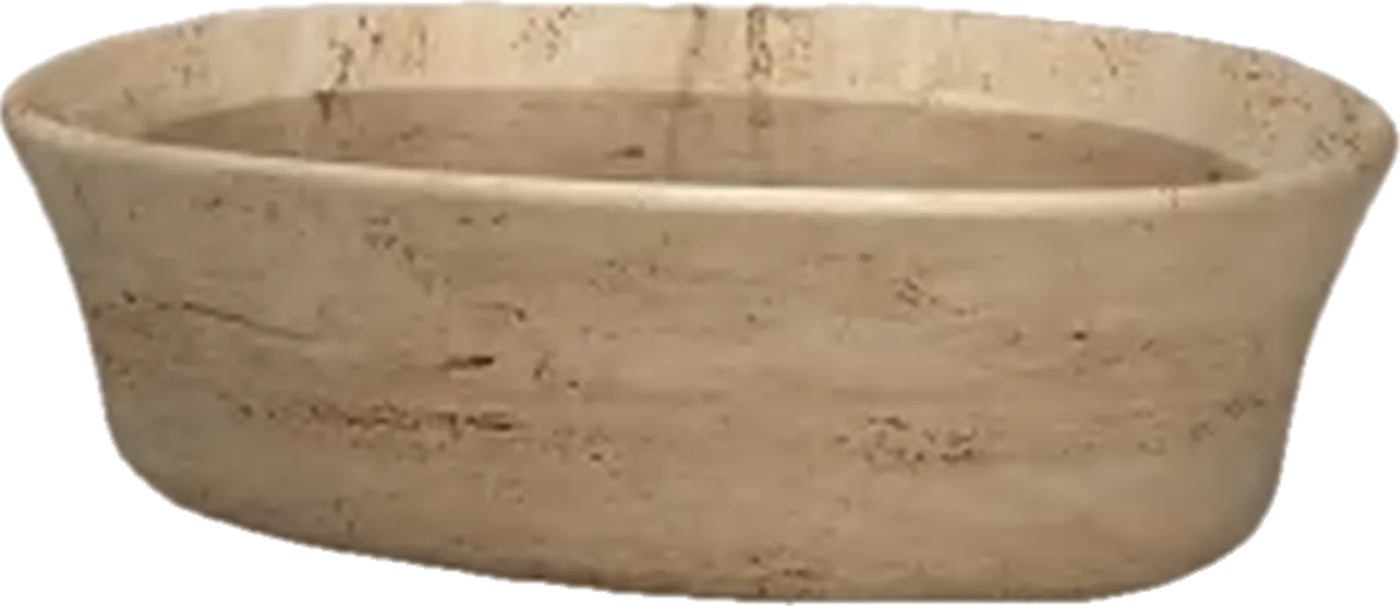
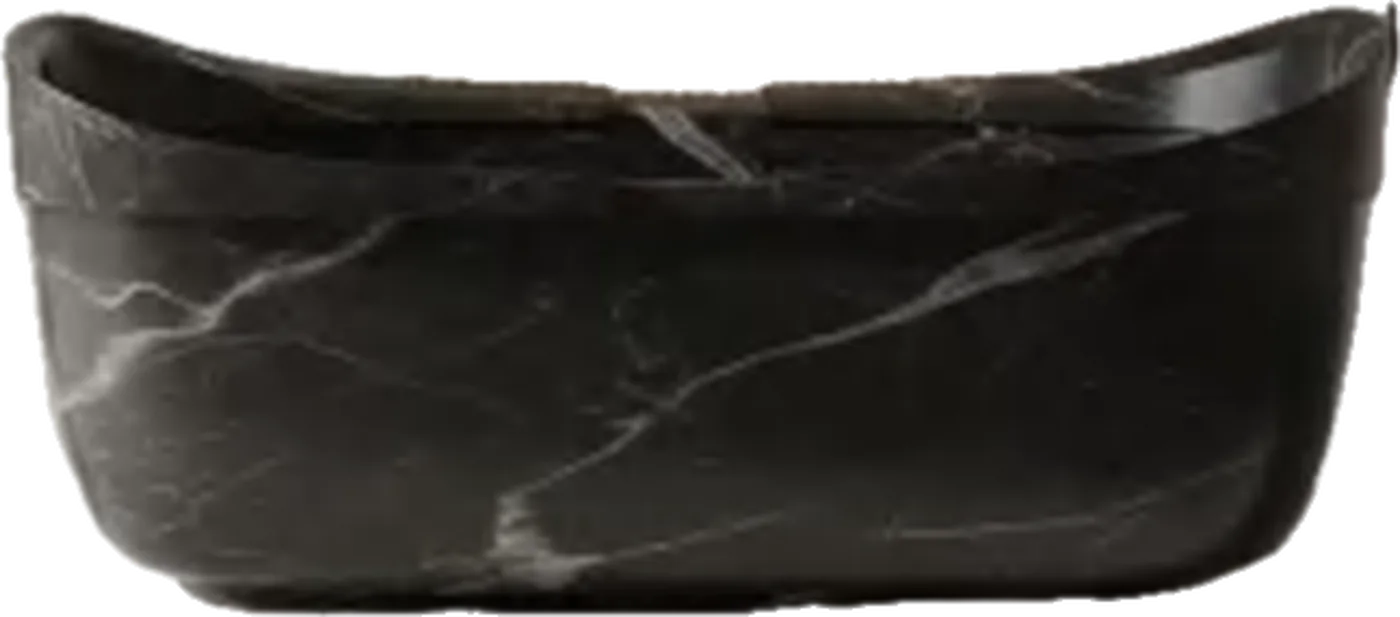
Choose a marble tub with a clean silhouette so the stone does the work, and see all bathtubs. A marble basin or a vessel basin on a slab top works for the vanity; browse vanities.
Marble is about 168 lb/ft³, and a solid tub weighs about 1,100–2,500 lb empty. Read the weight guide and have a structural engineer check the floor. Pietra Fonte pieces are made to order, and every quote gives exact dimensions and weight.
How should light and ventilation work?
Veined slabs need even, grazing light. Wash walls from above or along the edge and add cross lighting at the mirror from both sides. A recessed waterproof light belongs over the tub or shower.
Duct the exhaust fan outdoors and size it to local code. Squeegee stone walls after showers and keep a neutral pH cleaner on hand.
What drives the budget?
Published US prices for solid-stone tubs run about $7,930–$37,000 (Oct 2026), with rare onyx at $50,000 and up. Stone vessel basins are $435–$5,950 and stone vanities $1,267–$14,999. Veining rarity and slab matching set the difference. See the marble tub cost guide.
What mistakes weaken the look?
- Two competing veined stones in one room.
- Ornamental fixtures that fight the stone.
- Cutting slabs without a layout so the veining breaks at corners.
- Skipping sealer: seal daily-use stone with a penetrating sealer about once a year.
- Using acidic cleaners, which etch the polish.
Sources
Every piece is made to order. Tell us about the room and we reply within one business day.
Get a quoteOrder the sample book