What makes a Mediterranean bathroom, and which stone suits it?
Last updated November 2026.
Quick answer
- Architectural cues
- Stuccoed walls, arched openings, wrought iron, red clay tile
- Palette
- Whitewash, sand, ochre and terracotta, with sea-blue accents
- Best-fit stone
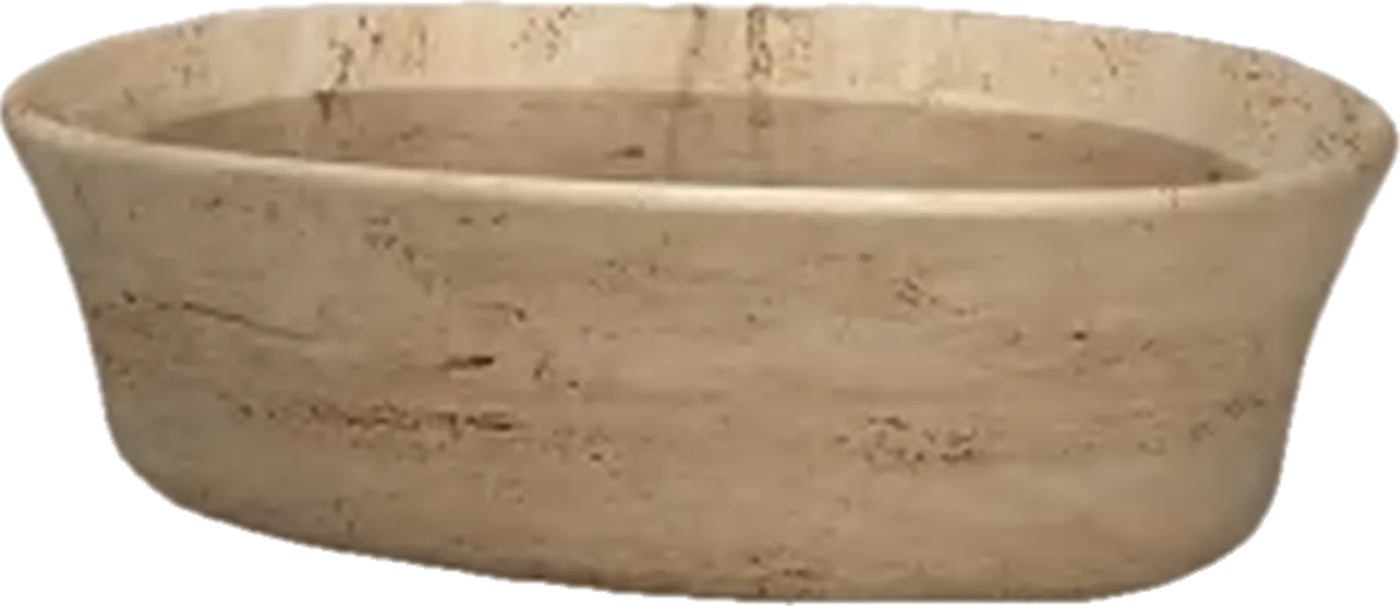
- Warm beige travertine, honed or brushed
- Travertine porosity
- 10–70% when fresh, so seal it
- Space in front of tub
- 30 in recommended, 21 in code minimum
A Mediterranean bathroom takes its cues from sunlit coastal houses: textured plaster walls, arched niches, handmade tile, wrought iron and warm sand tones. Beige travertine fits best. It is the stone of sun-baked building traditions, its pitted surface suits plaster and terracotta, and it stays warm in color.
Get a quote with exact size and weight
What makes a bathroom Mediterranean?
The style borrows from Mediterranean and Mediterranean Revival architecture. Walls are typically stuccoed, windows are often arched or circular, balconies and grilles use wrought iron, and roofs are red clay tile. Inside a bathroom those cues become plastered walls, arched niches, iron hardware and terracotta or glazed tile.
The mood is warm, sun-washed and tactile. Surfaces are matte and slightly uneven, the opposite of a glossy, symmetrical room.
Mediterranean in this guide names a look drawn from coastal European and Revival architecture, not the origin of any Pietra Fonte piece.
Planning a stone bathtub?
Tell us about the room. We reply within one business day with options, and every quote gives the exact dimensions and weight of the piece.
What colors define a Mediterranean bathroom?
Start with whitewash or warm sand on the walls. Add ochre, terracotta and clay on floors and accents, then one cool note such as glazed blue or green zellige-style tile. This is a palette of warm neutrals, not stark white.
- Walls: plaster or stucco in white, cream or sand.
- Floor: honed stone or terracotta tile.
- Accent: one glazed tile color, used on a niche or splashback.
- Metal: wrought iron, aged brass or oil-rubbed bronze.
Which stone suits a Mediterranean bathroom best?
Travertine is the best fit. It forms from calcium carbonate deposited around springs, and impurities make it cream, tan, rusty or brown. It has been a building stone since Roman structures such as the Colosseum, and its pitted surface complements plaster and clay.
Use honed or brushed finishes. Jerusalem stone and Crema Marfil are warm alternatives for floors and walls. Compare tub materials in the travertine vs marble guide.
| Element | Choice | Why |
|---|---|---|
| Tub | Beige travertine, oval or egg shape | Warm tone matches plaster and tile |
| Floor | Honed travertine or terracotta | Matte, forgiving underfoot |
| Walls | Plaster or stucco | Visible hand texture |
| Basin | Stone vessel on a plastered or wood plinth | Sculptural, low-contrast |
| Hardware | Wrought iron or aged brass | Echoes balconies and grilles |
Style cues: Wikipedia, Mediterranean Revival architecture. Stone: Wikipedia, Travertine.
How much space does the layout need?
Allow 30 in clear in front of a tub (NKBA recommendation; code minimum 21 in) and 30 in along its side. For the toilet, NKBA recommends 30 in in front (code 21 in) and 18 in from centerline to the nearest wall (code typically 15 in). A 48 in walkway lets one person use a fixture while another passes.
Thick plaster walls and arched niches shrink the usable room, so measure to finished surfaces. Confirm with local code and a licensed plumber.
Which tub, basin and vanity fit?
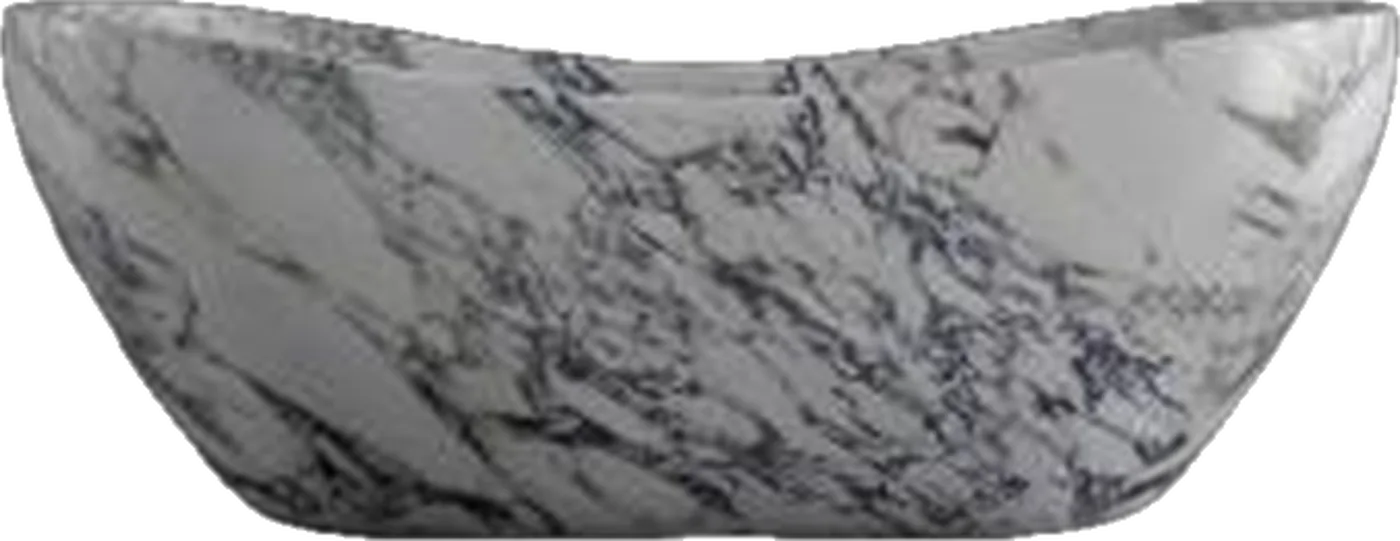
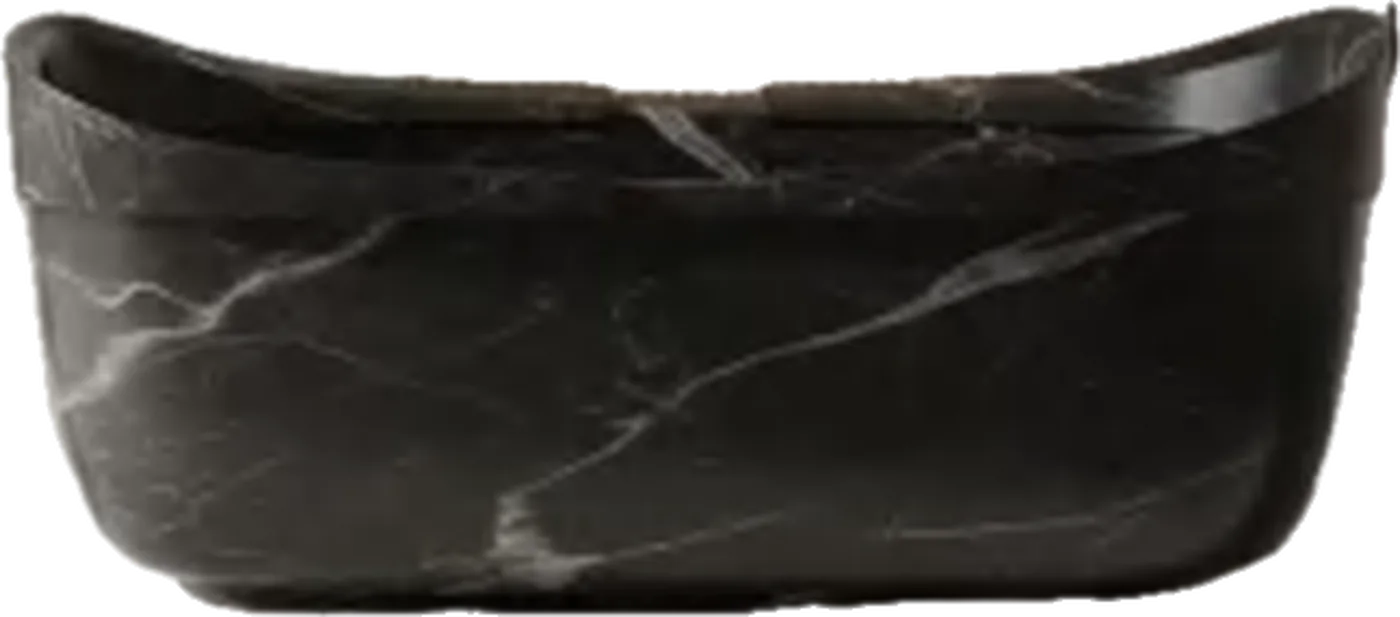
A rounded travertine tub is the anchor; see all bathtubs. Pair it with a travertine basin or a vessel basin, and choose a vanity in stone with a plain front.
Travertine is lighter than marble (about 156 vs 168 lb/ft³ in our weight model), but a solid tub still weighs about 1,100–2,500 lb empty. See the weight guide and ask a structural engineer to check the floor.
Where should a Mediterranean bathroom use arches?
Use arches where the plan already has an opening: a shower recess, a mirror niche, a doorway or a window. Arched or circular windows and arched door surrounds are defining features of the architecture, and the same shape works on a small scale indoors.
Repeat one arch radius throughout. Mixed arch sizes look accidental.
How should light and ventilation work?
Let daylight in through a window or high arched opening if the plan allows, and add warm light at the vanity from both sides of the mirror. A recessed waterproof light belongs over the tub or shower.
Plaster and porous stone need dry air. Duct the exhaust fan outdoors, size it to local code, squeegee shower walls and leave the door open afterward so moisture can escape.
What drives the budget?
Published US prices for solid-stone tubs run about $7,930–$37,000 (Oct 2026), stone vessel basins $435–$5,950 and stone vanities $1,267–$14,999. Stone choice, tub size and wall thickness drive most of the difference. See the marble tub cost guide.
Hand-applied plaster and artisan tile add labor; a stone tub concentrates the budget in one piece.
What mistakes weaken the look?
- Polished, glossy stone, which fights the matte plaster.
- Unsealed travertine; use a penetrating sealer about once a year in daily-use bathrooms.
- Acidic cleaners, which etch travertine and marble.
- Theme pieces such as painted tile borders everywhere; keep to one accent.
- Too many arches at different sizes.
Keep the color story simple. A Mediterranean room needs one warm neutral and one cool accent, not a rainbow of tile. If you want pattern, use it on a single plane such as the shower back wall or floor, and let the stone and plaster carry the rest in plain tones.
Sources
Every piece is made to order. Tell us about the room and we reply within one business day.
Get a quoteOrder the sample book